We went down to the orchard today and harvested about 22 pounds (10 kilos) of mirabelle plums from our trees. We really should have harvested them a week or so earlier, but we simply haven’t had the time. Thank God we found Nico, our new farm hand, when we did or a lot of other things around here would be looking as bad as our orchard. But he’s going to be here tomorrow and will hopefully be cutting the insanely high grass at the orchard finally so at least walking through there won’t be a huge chore anymore.
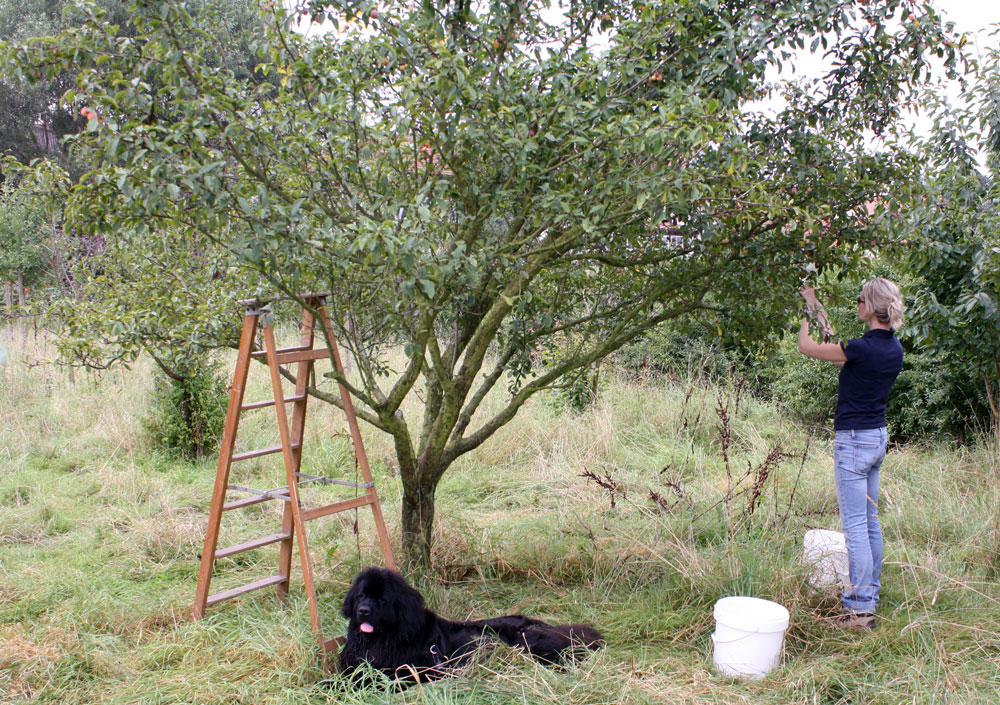
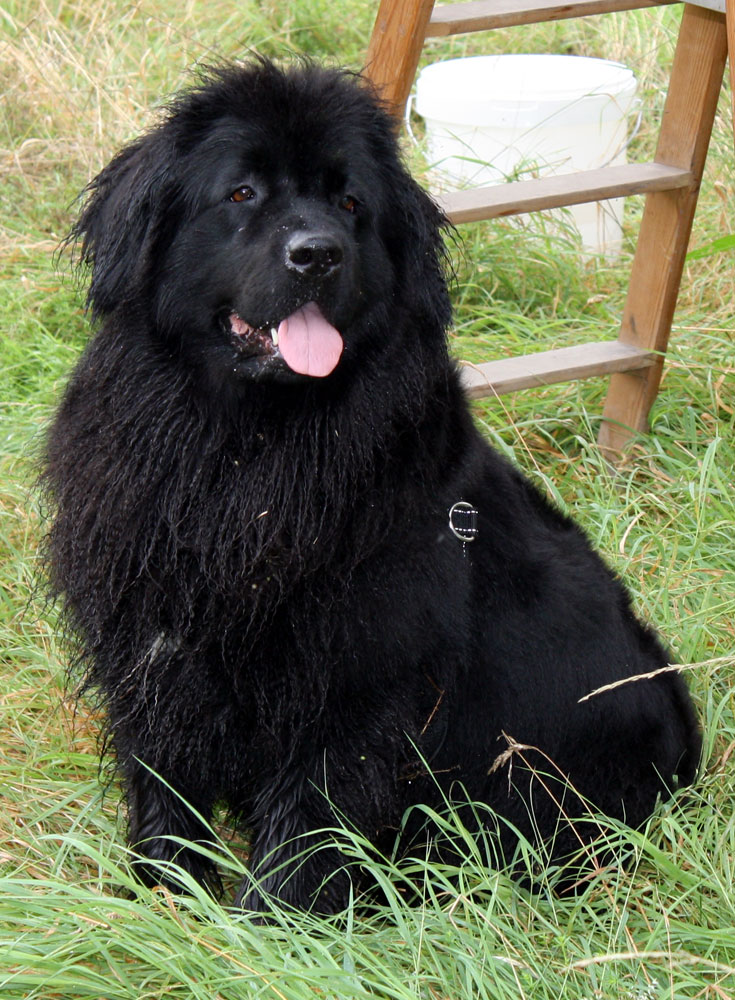
Naturally we had our two helpers with us. Mack did some stretching and foot chewing to warm up for all the harvesting.

Ayla wore herself out chasing mirabelles. I don’t think she found most of the ones we threw for her, but she had fun running after them over and over again. Unfortunately she couldn’t get down to the water because the path is completely overgrown. Maybe Nico will have time to clear that area too tomorrow.
In case you are not familiar with mirabelles, they are very small yellow plums, similar in taste to an apricot but generally not as sweet. Many people make them into jam or just can the whole fruits in jars, but we decided to make wine from ours instead.
It’s not a difficult process but you do have to remove the pits from them before you start the fermentation process. They are very high in tannins and I read they could even give an almond flavor when you preserve the fruits in a jar…but that’s not what we’re looking for in our wine.
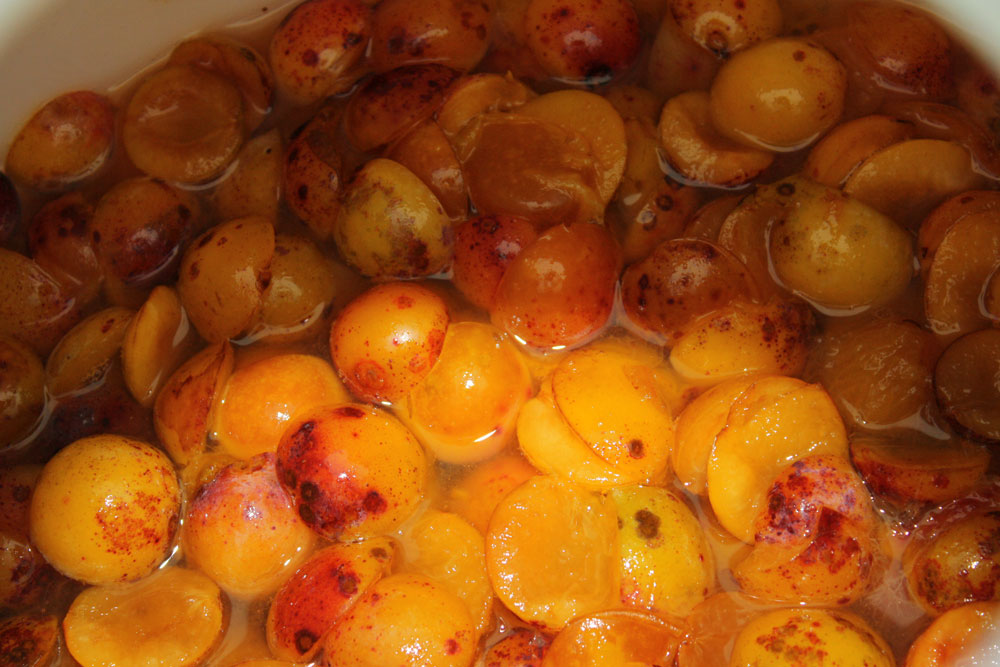
These 10 kilos of fruit will probably make about 10 liters of wine. Unfortunately it needs to sit for about 2 years before you can drink it. So we’ll be waiting a while to know if this was all worth it. It seems that most of the mirabelle plum trees in our area only produce fruit every 2 years, though, so we may be able to give the wine a try before we harvest fruit again from our trees. There are actually quite a few trees on public orchards in our area as well, so if it does turn out to be tasty, our friends and family should be looking forward to getting a bit of it when it’s ready.
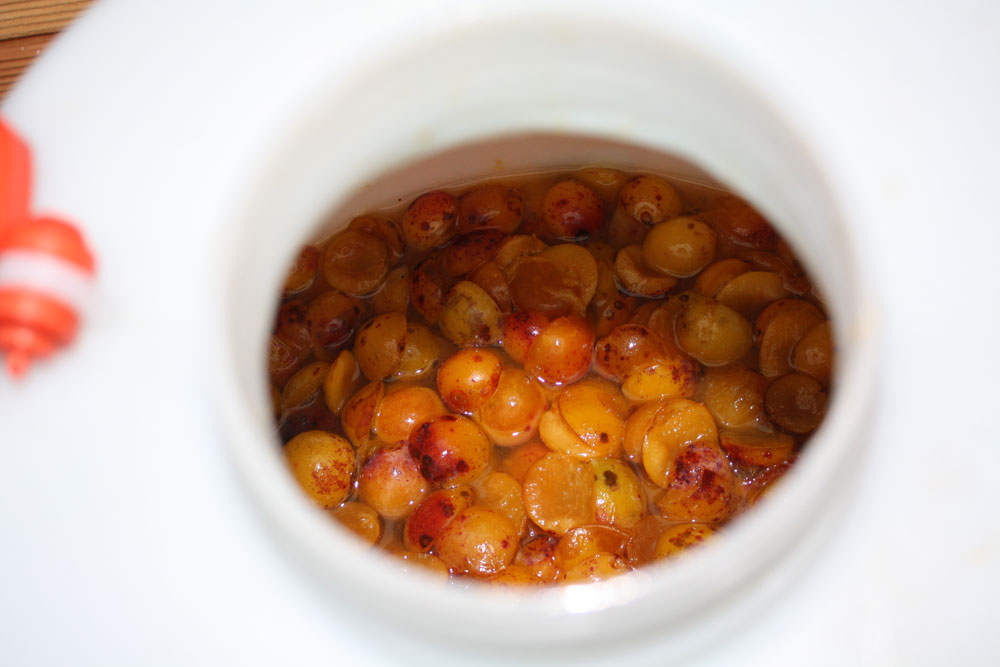
Mirabelle Plum Wine
- Total Time: About 2 years, 3 months (mostly waiting)
- Cuisine: German
Ingredients
- 22 pounds mirabelle plums
- 1 gallon water
- 5.5 pounds sugar
- 2 Campden tablets, crushed (or 2 g potassium metabisulfite), divided
- 1 liquid ounce anti-gel (pectic) agent
- 4 g yeast nutrient (Hefenährsalz)
- 1 bottle Rüdesheimer wine yeast
Instructions
- Pit the mirabelles and lightly crush (wear gloves to avoid staining). Put the fruit in a fermentation barrel or demijohn.
- Bring the water to a boil and pour it over the fruit.
- Add sugar, 1 Campden tablet (or 1 g metabisulfite), anti-gel and yeast nutrient. Stir or shake and cool to room temperature.
- Add yeast and stir or shake again. Close and fit a fermentation lock.
- Keep at room temperature (no higher than 75°F — check your yeast’s preferred range) for 7–14 days, until the airlock goes quiet.
- Press the contents in a fruit press into a clean barrel or demijohn. Add the second Campden tablet (or 1 g metabisulfite). Close and fit the airlock.
- Let sit about 30 days at room temperature, shaking daily. When no more bubbles rise after shaking, let rest another 7–14 days.
- Rack the wine into a clean vessel, siphoning the clear liquid off the top with as little disturbance to the sediment as possible. Rest another 30 days.
- Bottle and age in a cool room for 2 years.

Free recipe collection
From Our German Kitchen
9 of our family's favorite German recipes, plus flour, butcher and grocery cheat sheets. Grab it free: