This post includes sponsored content or partner links from our archive. See our disclosure.
We’ve had the travel bug for the better part of two decades together and when we started considering our upgrade journey from tent to RV, we looked at a lot of different rigs. Some of them were quite a bit older as we considered buying one that we could fix up and personalize for ourselves.They were often complete with wood paneling and interiors that smelled faintly of every adventure they’ve ever been on.
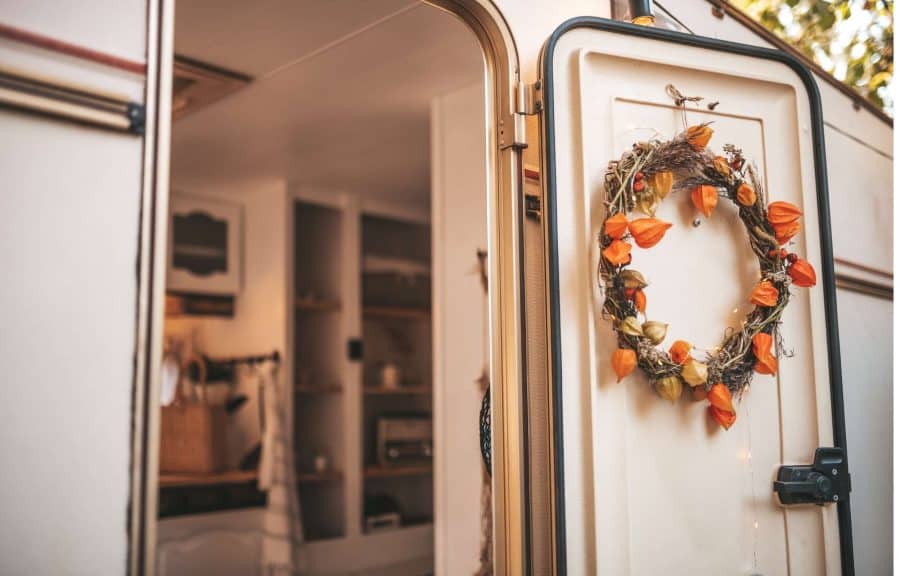
We couldn’t deny that there’s something genuinely charming about an older camper that a brand-new build just can’t replicate. Like an older home, there’s a certain vintage character and a sense that this thing has already lived a full life and still has more road left in it.
That’s a big part of why the vintage RV restoration community has exploded over the last decade. People are rescuing old Airstreams, retro campers, classic fifth wheels and bringing them back to life with fresh interiors and modern updates. We understand the appeal completely.
But there’s a side of older RVs that most renovation content doesn’t cover. Not the fun stuff like the paint colors, tile choices, and built-ins, but the part that matters before any of that starts.
What’s actually inside the walls.

The Part That Gets Skipped in Most “RV Renovation” Content
Here’s what typically happens when someone buys a vintage camper:
They fall in love with the bones. They start mapping out the layout. They watch fifteen YouTube videos about flooring options. And then, somewhere around day two of demo, they’re elbow-deep in materials they didn’t fully think through.
We’ve seen it happen. We’ve done versions of it ourselves.
The reality is that older RVs — particularly those built before the 1980s — were often constructed using materials that were completely standard at the time but are now understood to carry health risks. Asbestos was one of the most widely used.
Before it was partially banned in the US in the 1980s, asbestos showed up in a lot of places you wouldn’t necessarily expect: vinyl flooring and the adhesives beneath it, pipe and wall insulation, ceiling materials, heat shielding near furnaces and stoves, and brake linings in older trailers. It was cheap, fire-resistant, and effective — which made it common across construction, vehicle manufacturing, and campground infrastructure alike.
The EPA has since determined that disturbing and handling asbestos associated with legacy uses poses unreasonable risk to human health — though they also note that undisturbed asbestos in place doesn’t carry the same level of risk.
That distinction matters a lot when you’re thinking about renovation work.
Why Renovation Is When the Risk Goes Up
Asbestos that’s intact and undisturbed generally isn’t the problem. The concern begins when materials start breaking down on their own — from age, water damage, or wear — or when they’re actively disturbed during a project.
Demo work is where things get complicated.
Pulling up old flooring. Tearing into walls. Sanding surfaces. Removing insulation. These are all normal parts of an RV renovation. They’re also the situations where asbestos fibers can become airborne. Because the fibers are microscopic, you won’t see them — and you won’t know they were there until long after the fact.
That delayed timeline is part of what makes asbestos exposure worth taking seriously. The health conditions associated with it — including mesothelioma, a cancer affecting the lining of the lungs and other organs — can take decades to develop after exposure. Resources like Mesothelioma Hope offer straightforward explanations of how exposure works, what the long-term health implications are, and what people should know — worth reading if you’re spending significant time in or around older rigs.
What “Being Careful” Actually Looks Like
This isn’t about avoiding older RVs. It’s about approaching them with the same thoughtfulness you’d bring to any older structure.
A few things that are genuinely worth doing before any major renovation:
- Test before you tear anything out. If your RV predates the 1980s and you’re planning flooring removal, wall demo, or insulation work, testing suspicious materials first is a straightforward precaution. At-home test kits exist, or you can bring in a professional.
- Don’t assume you can identify asbestos by looking at it. This is one of the trickier parts — materials containing asbestos often look completely ordinary. Old vinyl tile looks like old vinyl tile. That’s exactly why testing matters.
- Minimize dust when working around old materials. Cutting, sanding, drilling, or aggressively pulling out old materials are the highest-risk activities. Less disturbance, less potential for fibers to become airborne.
- Consider encapsulation over removal. In some cases, covering existing flooring or materials is safer than tearing them out — especially if the materials are in stable condition and your timeline allows for it.
- Be careful around older brake components. Brake linings in older trailers historically contained asbestos. If you’re doing brake work on a vintage rig, this is another area worth handling carefully or deferring to a professional.
The Honest Version of DIY Self-Reliance
One of the things we love most about the RV community is the DIY spirit.
People figure things out. They learn as they go. They share knowledge freely and help each other solve problems that seem impossible until they’re not. It’s one of the genuinely good things about this lifestyle.
But self-reliance also means knowing where your knowledge ends. And for most of us, that includes being honest about when a project requires more than a YouTube tutorial and some protective gloves.
We’ve written about ways to make an RV feel more like home, the personal touches, the small upgrades, the things that turn a vehicle into a space you actually want to live in. All of that is worth doing. It just goes better when the foundation is solid and the materials you’re working with are understood.
Older RVs Are Still Worth It
None of this is meant to talk anyone out of a vintage rig. Honestly, some of the most interesting RVs on the road are the ones with age and personality.
They slow people down. They start conversations. They carry a kind of character that newer builds are still working toward.
Loving older things responsibly just means understanding what comes with them — the same way an older home requires different maintenance awareness than a new build. A little extra knowledge up front makes the whole project go better.
And when the renovation is done right, you get something that’s genuinely yours: a rig with history, updated for the road ahead, and built in a way that protects the people inside it.
That’s the whole point.