Note: This post contains affiliate links. If you purchase through these links, we may earn a small commission at no extra cost to you. These earnings help sustain our travels and keep this blog running.
All three of us rely heavily on functioning high-speed internet; be it for work, school, or entertainment. Sadly, the most beautiful areas of the country can have extremely shoddy internet. And even within close proximity, you often find yourself with poor cell reception. (We won’t even get started on the internet that most campsites provide. It was really never meant for more than checking an occasional email, right?)
After quite a few months of trying to make things work with a Verizon hotspot, which got increasingly more expensive and less reliable, we finally decided to splurge on a Starlink for RV use in August 2024! We were traveling and had way too many meetings going on, and the anxiety of possibly not being able to connect for work was a real issue.
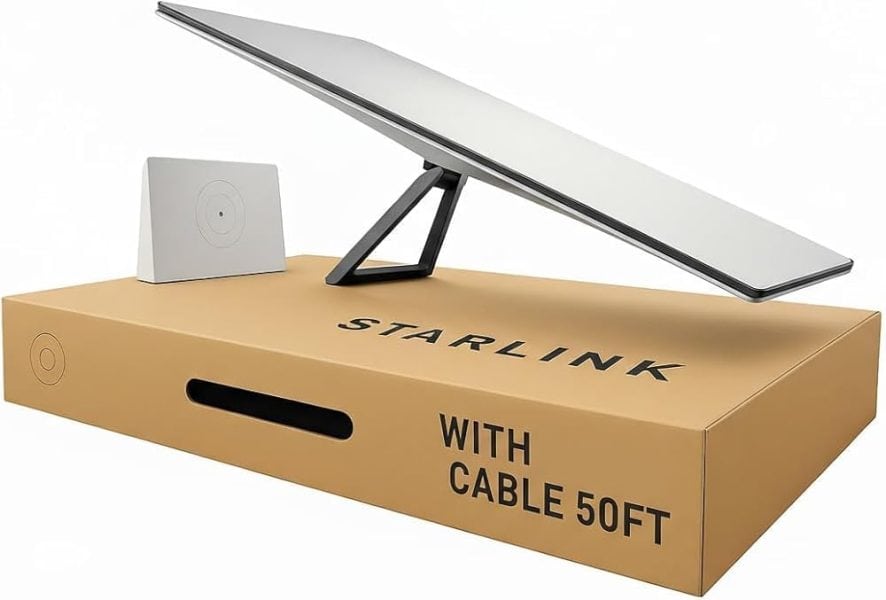
Understanding Starlink: A Game-Changer for RVers
Starlink, developed by SpaceX, is a satellite internet service that aims to provide high-speed internet access across the globe. Unlike traditional internet services that rely on terrestrial infrastructure, Starlink utilizes a constellation of low Earth orbit (LEO) satellites. This innovative approach allows for widespread coverage and significantly reduced latency, making it an excellent option for remote and rural areas where traditional broadband services are limited or non-existent.
For those who love the freedom of the road, Starlink for RV use presents a number of advantages that make it particularly appealing:
- Reliable Connectivity in Remote Locations: One of the biggest challenges for RVers is finding consistent and reliable internet access in remote areas. Starlink’s extensive satellite network ensures that you can stay connected virtually anywhere your travels take you, from the heart of a national park to a secluded beach.
- High-Speed Internet on the Go: Starlink offers impressive download speeds that can rival or even surpass traditional broadband services. This means you can stream videos, attend video calls, and manage large downloads without the frustration of slow speeds or buffering issues.
- Easy Setup and Portability: The Starlink system is designed for easy setup, which is ideal for RVers. The portable satellite dish, commonly referred to as “Dishy,” can be quickly set up and aligned at each new location, providing flexibility and convenience as you move from one destination to another.
- Enhanced Online Experience: Whether it’s for entertainment, staying in touch with loved ones, or managing work commitments while on the road, a stable high-speed internet connection can significantly enhance your online experience. Starlink enables you to enjoy these benefits without the constraints of fixed location services.
- Cost-Effective Solution: While traveling, maintaining multiple services for internet access can be costly. Starlink offers a single, straightforward solution that eliminates the need for costly mobile data plans and unreliable connections that often accompany traditional mobile services.
Purchasing Starlink
When we realized we needed a reliable internet solution ASAP because of some pressing work deadlines, we didn’t want to sit around waiting for an online order. So, we just zipped over to our local Best Buy and grabbed the Starlink G3 right off the shelf. It was super convenient to get it on the spot, and we had it up and running in no time. This quick pickup from Best Buy was a total game-changer, letting us dive back into our work without skipping a beat, all while enjoying the freedom of our RV lifestyle.
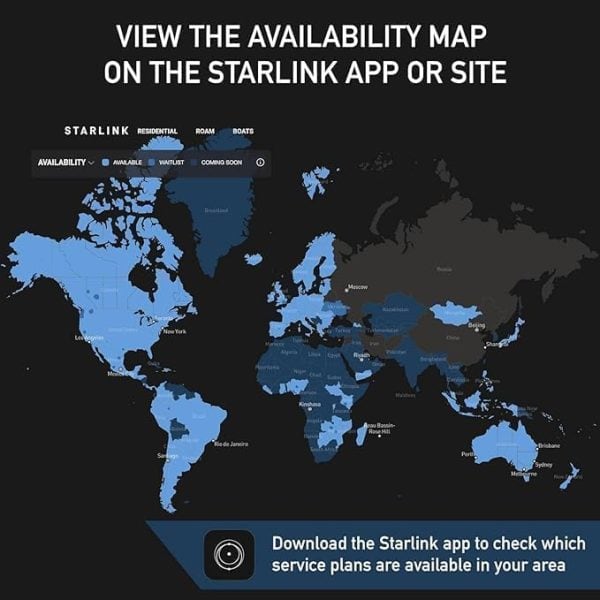
If you’re looking to get your hands on Starlink but can’t make it to a store like we did, no worries—you can easily order it online. Just head over to the Starlink website, where you can check out all the details and availability for your area. The process is straightforward: you fill in your address, see if the service is available, and then place your order right there. They offer different plans and pricing options, so you can choose what best fits your needs. Plus, the site provides all the info on what you’ll get in your kit and how to set it up once it arrives. Ordering online is super convenient, and they’ll ship your kit directly to your doorstep, ready for you to set up and start using.
Seamless Setup: Getting Our Starlink System Up and Running
Setting up our Starlink system turned out to be a breeze, which was a pleasant surprise given the technical nature of satellite internet. After unpacking our kit, we began by placing “Dishy,” our satellite dish, in a spot that had a clear view of the sky. The most clever part of our setup was running the cable from the router through the hatch of our outdoor kitchen. This little trick not only kept the cable hidden and protected but also prevented any trip hazards around our RV.
Next came the task of getting online, which involved a simple registration process. We downloaded the Starlink app, connected to the dish, and followed the on-screen instructions to create our account. It was straightforward and user-friendly, taking just a few minutes to complete.
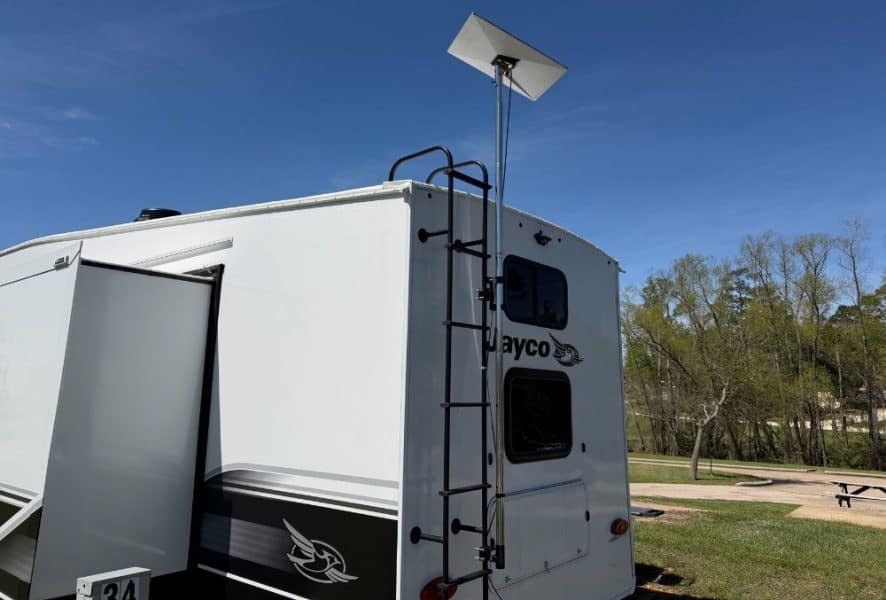
For RVers thinking about a more fixed installation, Starlink offers several mounting options that are worth considering. About a year later, before we started traveling full-time, we also bought a Gen 3 pole mount that we attach to the RV ladder which was a game changer. It allows us to run the cable under the RV, is easy to setup and adjust, and the connectivity actually seems a little better with Dishy higher up in the air.
Overall, from unpacking to surfing the web, the entire setup process was smooth and hassle-free, letting us get back to our work and enjoyment without missing a beat.
How fast is Starlink for RV Use?
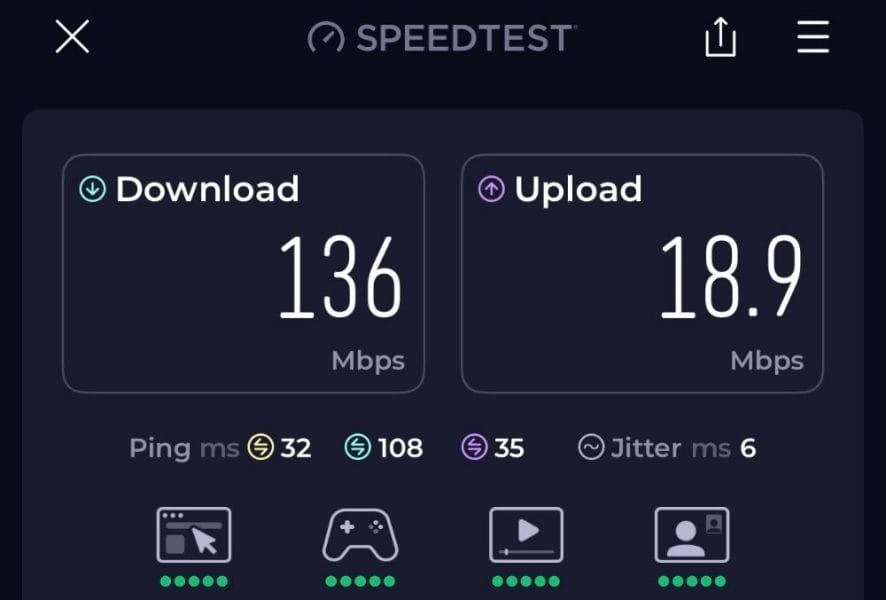
One of the coolest things about upgrading to Starlink Gen3 has been the jump in internet speeds. We’ve noticed download speeds hitting over 200 Mbps in some spots, which is pretty impressive, especially when we’re parked far from typical broadband services. It’s more than enough speed for us to handle all our online needs smoothly.
Upload speeds are solid too, often around 30 Mbps. This makes a big difference when we’re uploading large files or hopping on video calls for work. No more worrying about dropped calls or slow uploads.
But what really stands out with Starlink for RV use is how steady the connection stays, no matter where we’re parked. Whether we’re surrounded by mountains or out in the open plains, we’ve had a reliable link back to the digital world. It’s been a huge relief knowing that we can count on our internet to keep up with our travels and not the other way around.
Trees & Rain – the enemies of Starlink
With singing all of the praises of Starlink there is one major negative to point out: If the Starlink beam is obstructed by trees, reception is horrible. A torrential downpour or strong thunderstorm can also be a problem.
This has improved substantially over the last year or so, and is getting better all the time as they upgrade the satellite network. In most places we have stayed, this wasn’t a real problem, but the occasional campground with heavy tree cover can be a bummer. In fact, tree cover doesn’t have to be exceptionally thick, sometimes just a bit of obstruction can make the Starlink connection less than reliable. Therefore, we did keep the Verizon hotspot for quite a while as a backup. But the last 6 months we have had virtually no issues, especially with the new pole mount.
Do We Recommend Starlink for RV Use?
For us, Starlink Internet has been a game changer. S’ job requires lots of video conferences and generally is a bit too sensitive to do from a public place. So, public WIFI in coffeeshops are not really an option. In order for us to travel as much as we want to, we need a solid internet solution.
After we took our trip out West, we also experienced a lot of places with no cell phone reception so we invested in a Starlink Mini that can we powered via standard plug, our vehicle or even an 18v battery. It allows us to get messages and more out to loved ones if needed during super remote drives or hikes.
Would we get Starlink if it wasn’t for work? Probably. We’re so used to streaming our entertainment and being connected with family and friends via social media that it feels strange to disconnect sometimes. And at $165 per month on the Roam package, or $50 for 100 mb if we turn on the mini dish month-to-month, we have been extremely happy with the service.
Even though our dish is not permanently mounted, it’s easy to setup and breakdown when we move on. It’s fast and reliable and we can give it two very enthusiastic thumbs up. Again, it’s definitely not a cure-all for connectivity. It is however, a very solid tool that works great in most instances.
Check out Starlink’s Residential & Roam packages today (referral link)
This post contains affiliate links. If you purchase through them, we may earn a small commission at no extra cost to you. These earnings help sustain this website and keep us sharing our travels.