If you’ve just inherited a house full of stuff and have no idea where to start — you’re in the right place.
The person is gone. The stuff is not.
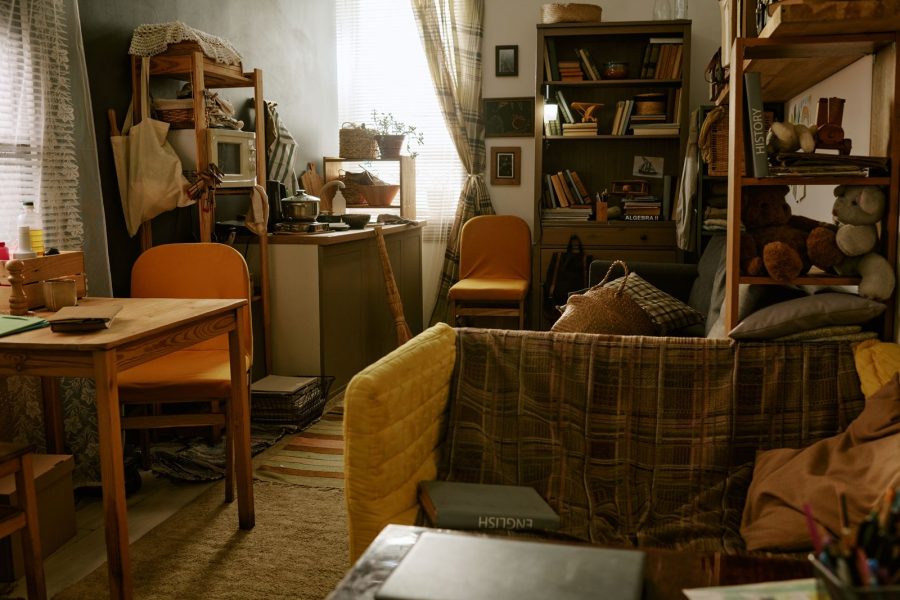
There are decades of accumulated belongings in every room, in every closet, in every drawer. There are things that look like they might be valuable and things that definitely aren’t and things that used to matter enormously to someone who can no longer tell you which is which. There are siblings with opinions, estate attorneys with timelines, and a grief that doesn’t pause while you figure out what to do with forty years of kitchen appliances.
Nobody handed you a manual when they handed you the keys.
I know this because I spent years in junk removal, walking into homes exactly like the one you’re probably standing in right now. I’ve watched good, capable, intelligent people become completely paralyzed by the sheer weight of what was left behind. I’ve watched families fracture over bread makers and costume jewelry. I’ve watched people accidentally throw away things worth thousands of dollars — and hold onto things worth nothing because letting go felt like losing the person all over again.
And I’ve watched people get through it. Not perfectly, not without grief — but completely. They got to the other side. They cleared the house, kept what mattered, let go of what didn’t, and found a way to honor the person without being buried by their belongings.
That’s what this guide is about.
Why Inheriting a House Full of Stuff Feels So Overwhelming
Most people, when they imagine this process, picture a weekend. Maybe two. They’ll go through the house, keep the things with sentimental value, donate the rest, and be done.

Here’s what actually happens.
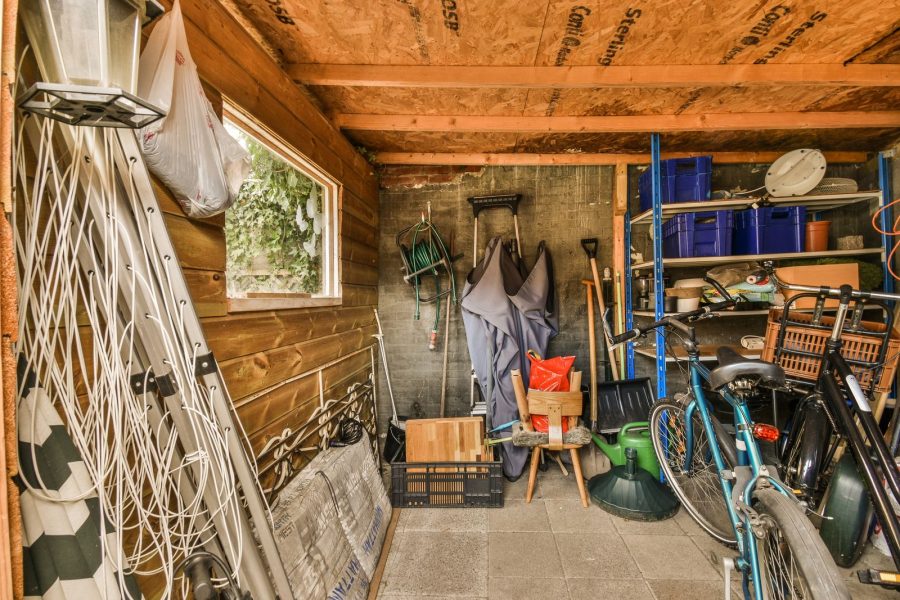
They walk in the front door and immediately feel a physical wave of overwhelm. The volume is almost always more than they anticipated — even in homes that seemed reasonably tidy when the person was alive. Closets that looked manageable from the outside turn out to be packed floor to ceiling. Attics. Basements. Garages. A lifetime of accumulated decisions made in the other direction — keep it, might need it, can’t get rid of that — stacked up over decades until it filled every available space.
Then the decisions start. And they don’t stop.
Every single item in that house requires a decision. Keep it or let it go. Keep it here or somewhere else. Sell it or donate it. And if donate — where? And if sell — how? And is this actually worth anything? And why does throwing away a set of mismatched measuring cups feel like a betrayal?
On top of all that there is grief. Often fresh grief. Sometimes the complicated kind — grief for a relationship that wasn’t simple, grief for a version of the person you wished you’d had more time with, grief mixed with relief mixed with guilt about the relief.
And often there are other people involved. Siblings who aren’t helping as much as they should, or who are helping too much in the wrong ways. Family members who appear suddenly with opinions about what belongs to whom. An estate that isn’t fully settled yet with legal implications nobody fully understands.
No wonder people freeze.
The Generation Behind the Stuff (Why Boomer Homes Are So Full)
We are in the middle of the largest inheritance event in American history.

The Baby Boomer generation — roughly 73 million people born between 1946 and 1964 — is aging rapidly. Every day, thousands of their adult children are facing what happens when a parent passes, downsizes, or moves into care: a house full of stuff that someone has to deal with.
There’s something specific about this generation’s relationship with things that’s worth understanding — because it changes how you approach the cleanout.
Many Boomers grew up in households shaped by parents who lived through the Depression and World War II. Scarcity was lived experience for that generation, and it produced a particular relationship with objects: you kept them because you never knew when you might need them. You kept them because waste was a moral failing. You kept them because things had a solidity and permanence that felt like security.
That inheritance passed down. And it combined, for many Boomers, with the particular accumulation habits of a generation that came of age during America’s great postwar prosperity — when there was suddenly enough money to buy things and the culture encouraged it enthusiastically.
The result, in a lot of cases, is a house where nothing was ever thrown away and a great deal was added over fifty years.
That’s not a character flaw. It’s a generational pattern. Understanding it doesn’t make the cleanout easier exactly — but it can make it feel less personal. The house full of stuff isn’t a burden your parent left you deliberately. It’s the physical record of a life lived in a particular time and place with a particular set of values about what things mean.
Which doesn’t mean you have to keep all of it.
The Fear Behind the Accumulation (aka What Your Parent Was Really Holding Onto)
I want to say something about the living version of this — the parent who is still here and still resistant to letting anything go — because it helps explain the homes many of us will eventually have to clear.

There’s a fear behind the accumulation that is very specific and very human and almost never spoken aloud.
Letting go of things feels, to many older people, like letting go of themselves.
Their possessions are the physical evidence of their life. The record of what they did, what they cared about, what they built, who they were. Getting rid of things can feel — viscerally, not just intellectually — like agreeing to become less real. Like beginning to disappear.
I think about this with my own father, who is 84 and has been a collector his entire adult life. His wife moved into memory care last year after a fall in their home. He’s been facing the process of sorting through decades of accumulated belongings slowly, alone, and with tremendous resistance. Not because he’s being difficult. Because every item in that house is a thread in the fabric of who he is. Pulling on any of them feels dangerous.
That fear deserves patience and compassion — even when the frustration is completely understandable.
What Gets Left Behind When There’s No Plan for the Cleanout
Let me tell you what I’ve seen happen when families go into this process without a framework.
- They make decisions in the wrong order — tackling emotionally loaded items first and burning out before they get to the practical sorting. They throw things away in bulk without doing a careful pass for hidden valuables. And I mean hidden literally, not just metaphorically. Cash in books, jewelry in winter coat pockets, financial documents labeled something innocuous in a filing cabinet, digital accounts still billing every month that nobody knows exist.
- They hold onto things out of guilt that they’ll never use, pay to store them for years, and eventually donate them anyway — having spent thousands of dollars on storage for the privilege of delaying a decision.
- They let family dynamics derail everything — an undiscussed assumption about who gets what surfaces mid-cleanout and suddenly nobody is speaking.
- They underestimate the time. They overestimate what things are worth. They exhaust themselves trying to sell items whose selling price doesn’t justify the hours it takes to move them.
None of this is inevitable. All of it is preventable with the right framework and the right information at the right moment.
Where to Start When You’ve Inherited a House Full of Stuff
The people who navigate this best share a few things in common. They start with the easy stuff and build momentum before tackling hard decisions. They go slowly through untouched spaces before making any bulk disposal decisions. They give themselves permission to feel whatever they feel without letting it stop them completely. They ask for help — practical help, emotional help, professional help when the volume or complexity warrants it.

And they follow a clear sequence. Here’s the one I’ve developed from years of watching what works and what doesn’t:
Step 1 — Secure first, sort later.
Before anything gets moved, touched, or decided on — change the locks, do a complete walkthrough with photos, check for immediate safety issues, and locate the important documents. This protects the estate legally and gives you a full picture before you make a single decision.
Step 2 — Start with the undeniable stuff.
The expired food, the medications, the obvious trash, the broken items. This is the Easy Wins phase — the things that require zero emotional energy and create immediate visible progress. A cleared kitchen counter and two bags of trash on day one is not a small thing. It’s the momentum that brings you back tomorrow.
Step 3 — Look carefully before anything leaves.
Before donation pickups arrive or junk removal trucks pull up — do one slow, deliberate pass through every space. Check books for hidden cash. Set aside jewelry and items that don’t look valuable but might be. Search the email inbox for digital accounts. This one hour of attention has saved my clients thousands of dollars more times than I can count.
Step 4 — Sort everything before it moves.
Four zones: Keep, Donate, Sell, Dispose. Every item gets a zone. Nothing sits in a maybe pile indefinitely. And before you decide to sell something — run the time value of money calculation. If a $35 item takes you two hours to photograph, list, and hand off, you just earned $17.50 an hour for emotional labor during one of the hardest periods of your life. Donate it and give yourself that time back.
Step 5 — Save the hard stuff for last.
The photos, the letters, the collections, the items that carry the weight of the person themselves — these come last. Not because they don’t matter, but because they matter so much that they deserve your full attention after the practical work is done and you can breathe again.
Want this as a checklist? The free First 48 Hours guide walks you through day one step by step, with a printable Quick Reference Card. Get the guide below.
Getting the Right Help for an Inherited Home Cleanout
You don’t have to do this alone — and in many cases you genuinely shouldn’t.

- Estate sale companies handle the selling side — they come in, price everything, run the sale, and manage the buyers, typically taking 30-50% commission. Best for homes with significant sellable items and when you don’t have the bandwidth for individual sales.
- Junk removal companies handle what’s left after the sale — or the whole thing if there’s not much worth selling. A good crew can clear an entire home in a single day. Get on-site quotes, not phone quotes. Volume is genuinely hard to estimate remotely and phone quotes are frequently lowballed. I know because I was on the other side of that call for years.
- Donation pickup services — Habitat for Humanity ReStores, Vietnam Veterans of America, and others — will come to you for free. Schedule early because it can take a week or two.
- Professional organizers who specialize in estate cleanouts bring both the practical help and the emotional steadiness to work through a home systematically. Worth it when the family dynamics are complicated or the emotional weight of it requires a neutral, experienced presence in the room.
Start Here: Your Free First 48 Hours Guide
If you are in the middle of this right now, or about to be, the best thing I can give you is a clear first step.
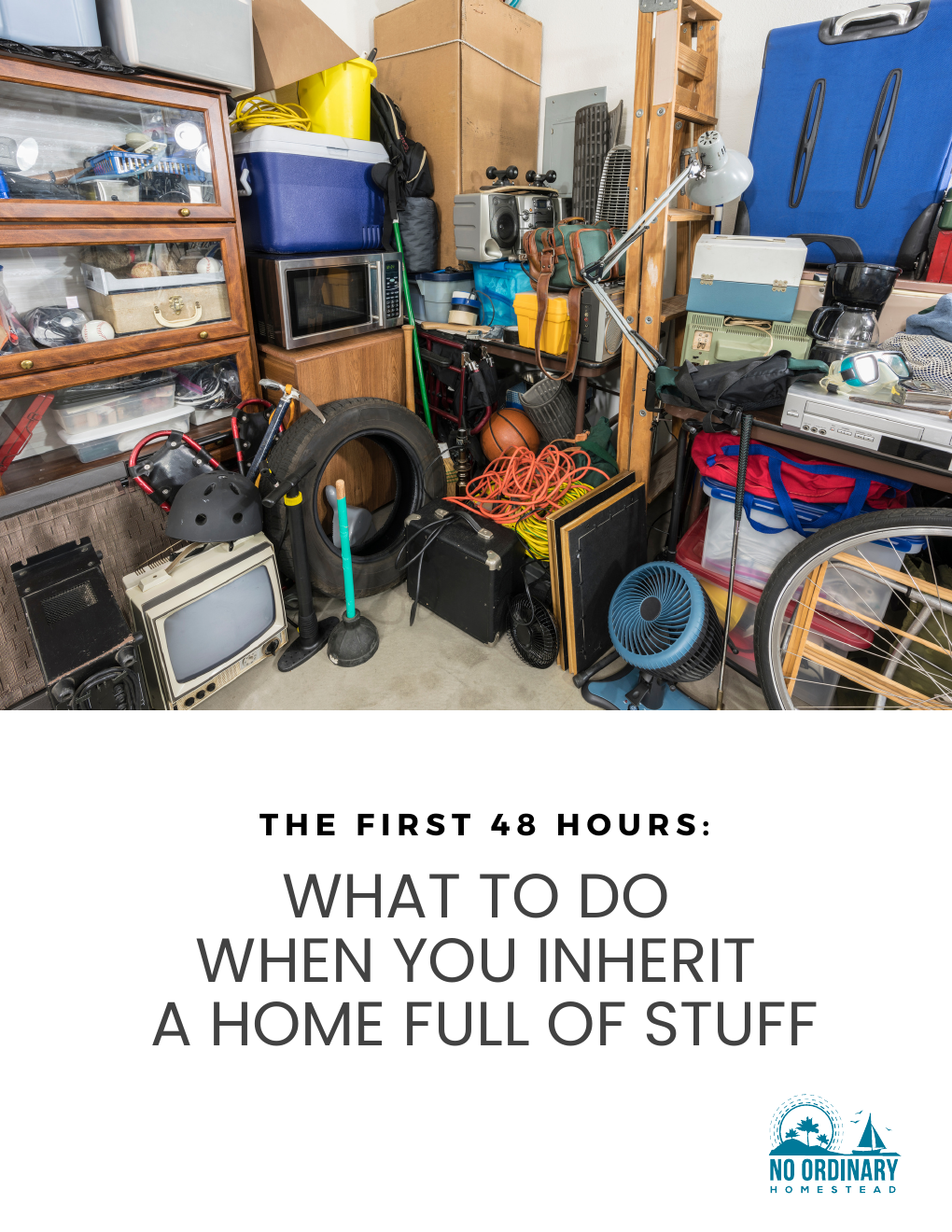
I put together a free guide called The First 48 Hours: What To Do When You Inherit a Home Full of Stuff. It’s a practical checklist that walks you through exactly what to do on day one: what to secure, what not to touch yet, where to start, what most people miss, and the one calculation that will change how you think about what’s worth selling versus letting go.
It’s free. It’s practical. And it will get you moving when moving feels impossible.
Free guide: The First 48 Hours
Ten pages, including a printable Quick Reference Card to take with you to the house.
What Comes After the First 48 Hours
The first two days get you oriented. The weeks after are where most families get stuck: the room-by-room decisions, the siblings who live three states away, and the stories you don’t want to lose along with the stuff.

That’s why I’m building The Last Cleanout, an app that walks your family through the whole cleanout together. Whether you’ve inherited a home or you’re helping a parent downsize, it gives everyone the same plan, a realistic timeline, and a place to save the stories behind the things you keep and the things you let go.
Right now I’m testing it with my own family as we help my dad sort through his house.
I’m also writing The Last Cleanout book, the complete roadmap for everything that comes after the first 48 hours: the full three-phase method, the decision frameworks that keep you moving without burning out, and the stuff nobody else talks about, like hoarding situations, hidden assets, family conflict, and the grief that shows up sideways in the middle of a Tuesday afternoon.
Grab the First 48 Hours guide above and you’ll be the first to hear when the app opens and when the book is ready.