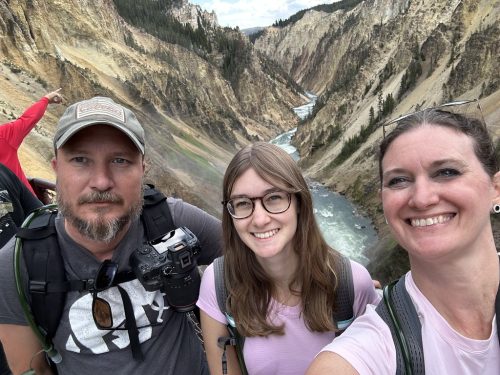
We visited Mammoth Cave National Park for a quick weekend in summer 2026, the seventh stop of our Oshkosh or Bust RV road trip.
Some stops on a road trip are about the scenery. This one was about what’s underneath it.
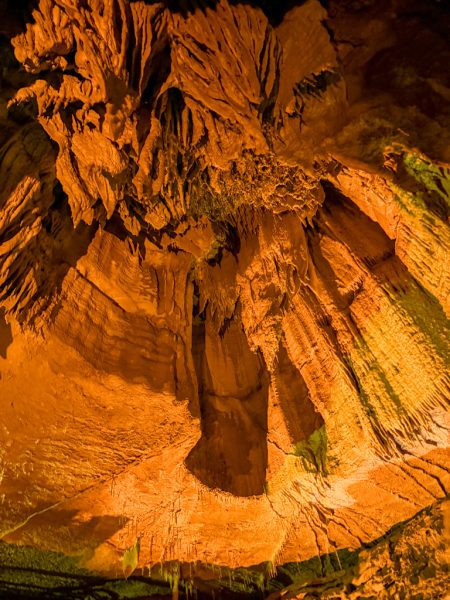
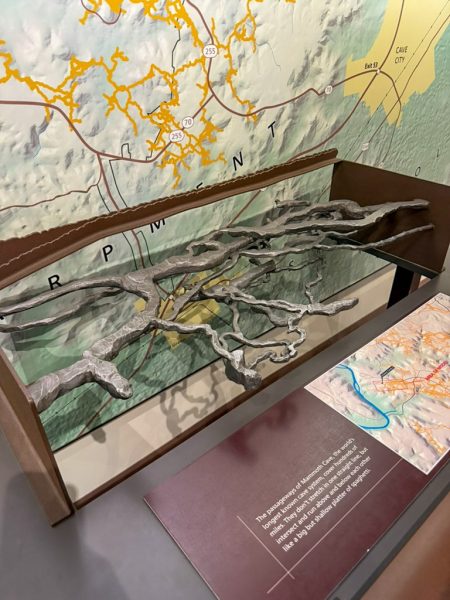
Mammoth Cave is the longest known cave system in the world. More than 426 miles of passageways have been surveyed so far, and explorers keep adding more every year. We had a weekend. Here’s how we spent it, plus a little of the local lore that makes this corner of Kentucky so much fun.
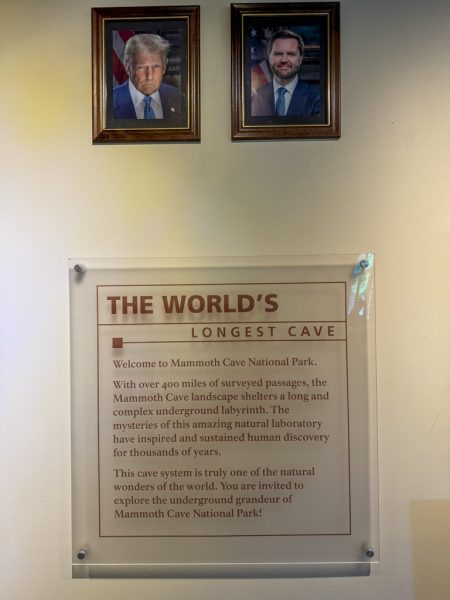
Getting There: Our Shortest Travel Day in a While
From Kentucky’s bourbon country, it was just 114 miles and a little over two and a half hours to Cave City. So short, in fact, that we pushed our departure to the very end of checkout time and crossed our fingers that our next campground would let us in early.
Neither end was a problem.
Our tip: On a short travel day, it never hurts to ask about a late checkout and an early arrival. Worst case, they say no.
Where We Stayed: Happy Trails RV Park
We based at Happy Trails RV Park, a small, family-run park on the edge of Cave City, minutes from the national park and right across the road from the famous Wigwam Village. The owners were very friendly, it was a great place to walk the dog, and there was a free firewood pile. For one of the first times in a long time, we actually made a campfire on our travels.
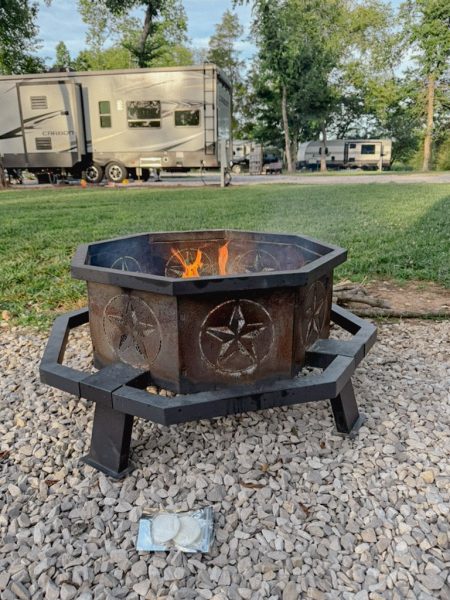
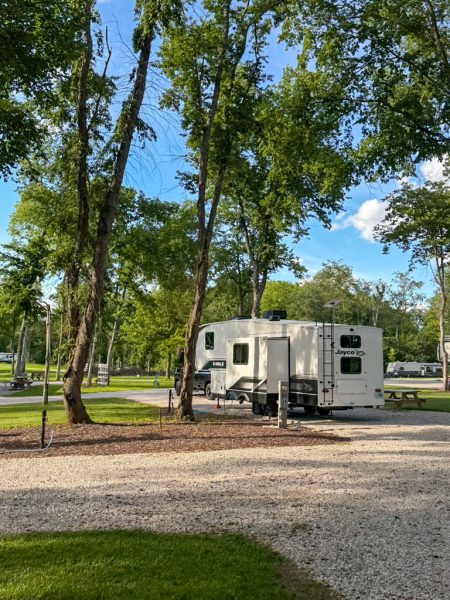
Read our full Happy Trails RV Park review.
The Domes & Dripstones Tour
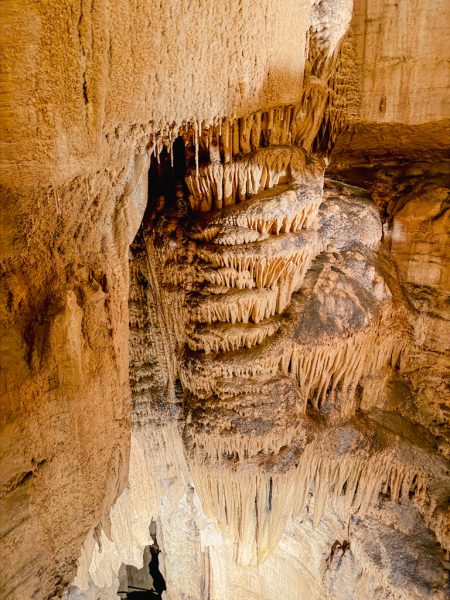
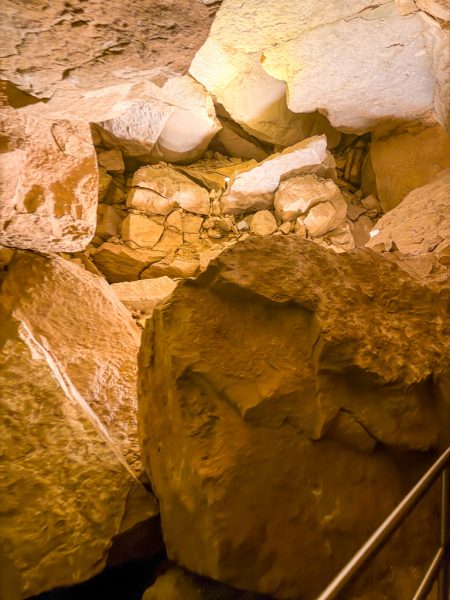
Mammoth Cave offers a whole menu of tours, from accessible walks to crawl-on-your-belly adventures. We picked Domes & Dripstones, a classic route that’s been in use for nearly 100 years. It starts in a sinkhole, passes through huge domes and ends in the dripstone section known as Frozen Niagara.
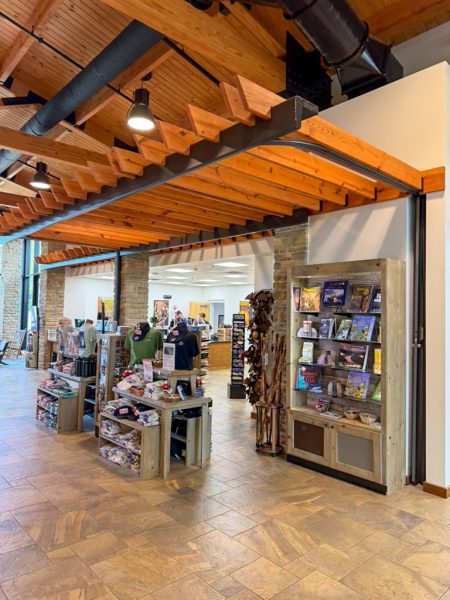
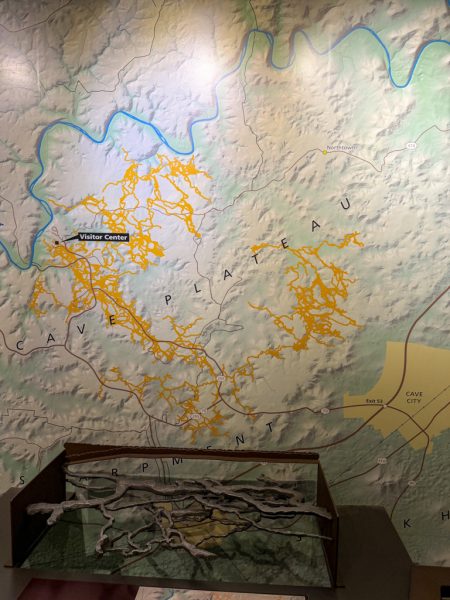
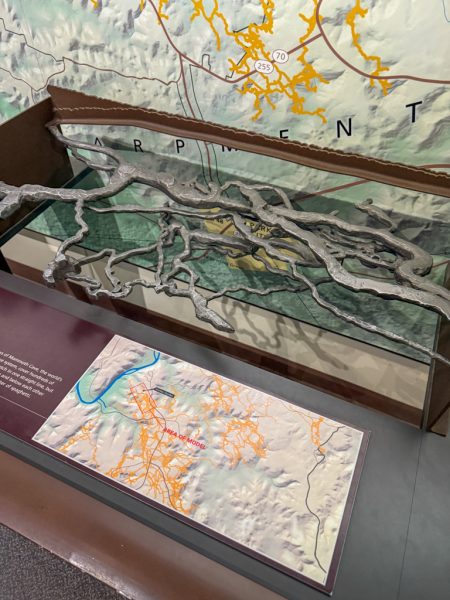
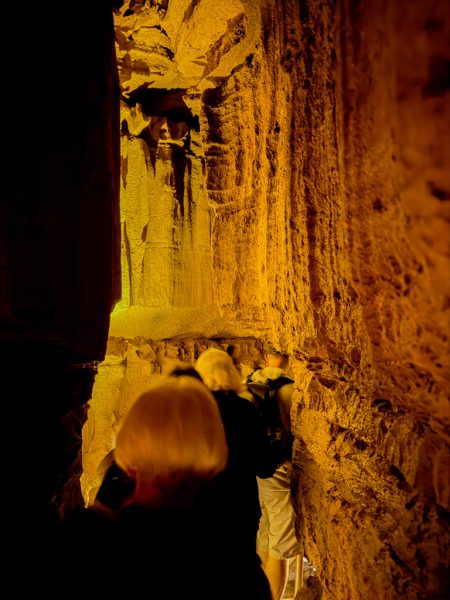
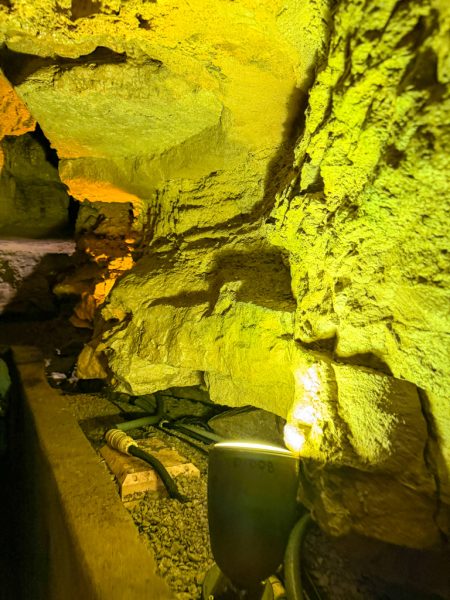
The whole thing ran very efficiently. Pickup is behind the visitor center, then a quick bus ride takes you to the cave entrance. The tour is about two hours and three-quarters of a mile, with 638 stairs along the way. For us, it was reasonably easy. Just watch your head! Someone on our tour bumped theirs, and it sounded gnarly echoing off the cave walls.
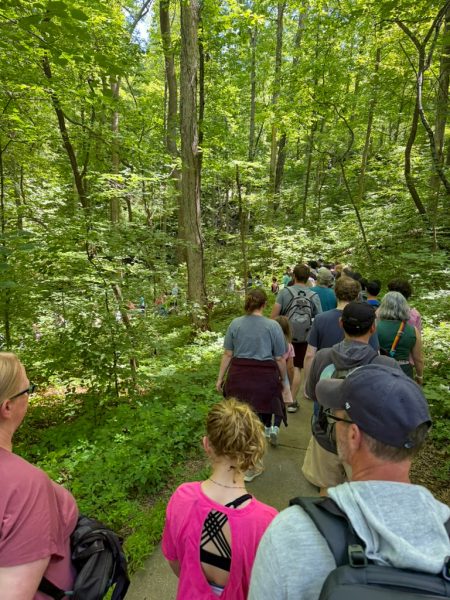
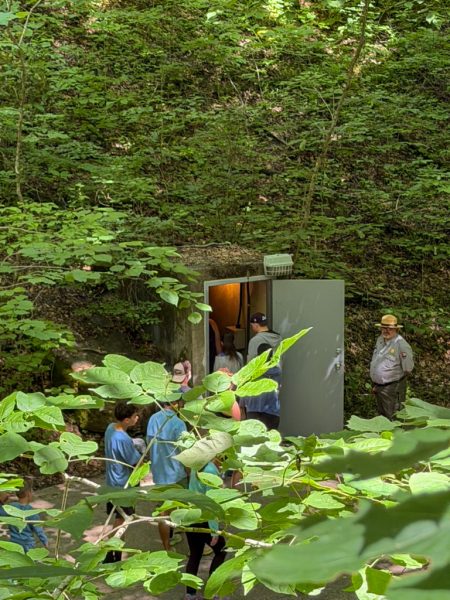
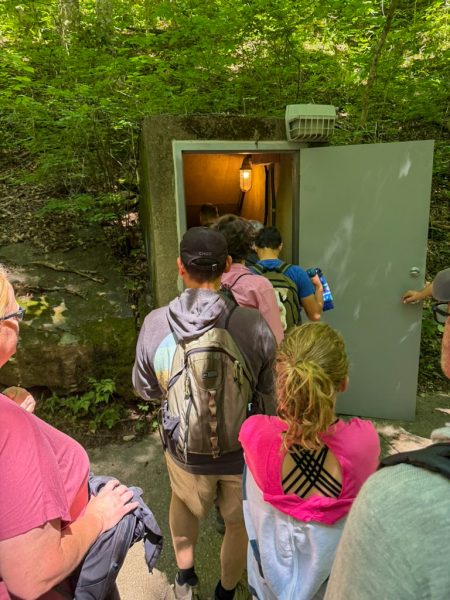
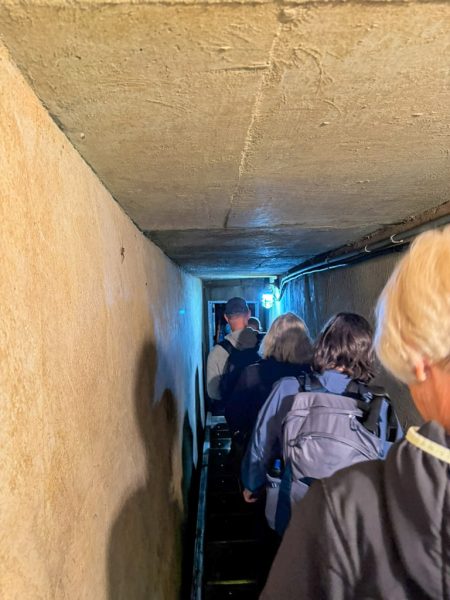
The caves are fascinating, and the rangers do an excellent job narrating. With such a large group, we expected it to feel crowded. It didn’t. The group spaces out naturally along the route, and it was very pleasant.
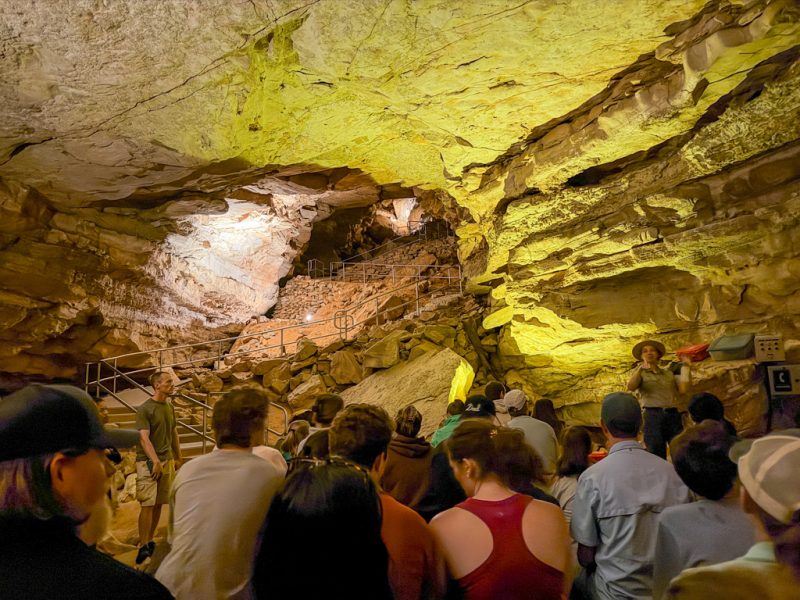
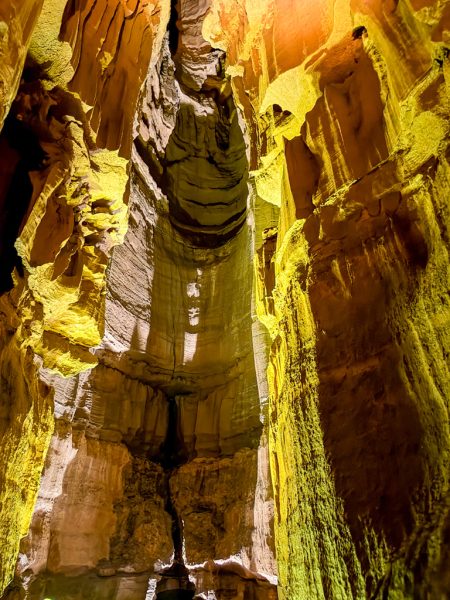
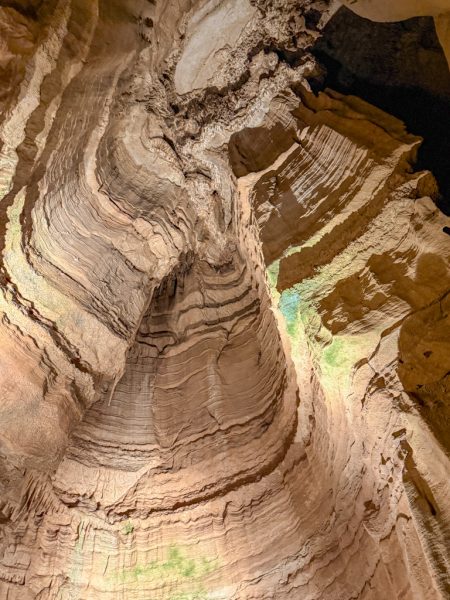
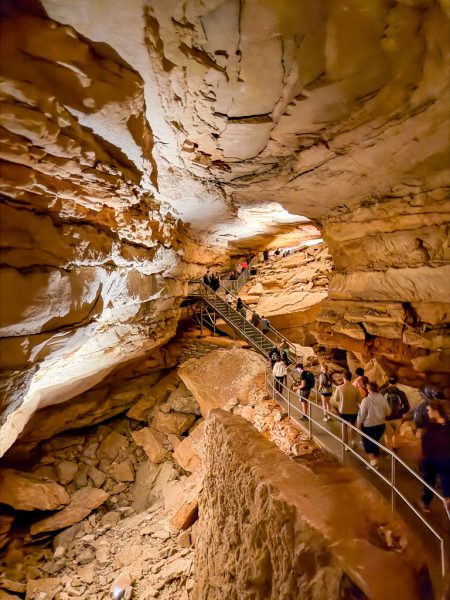
The highlight? When the rangers turn the lights off. It’s so dark you can’t even tell if your eyes are open or closed.
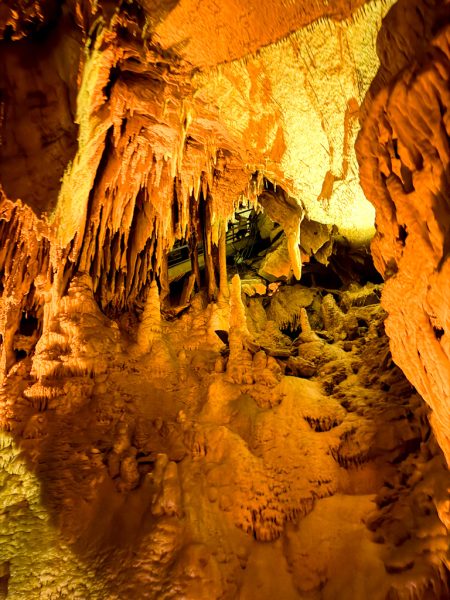
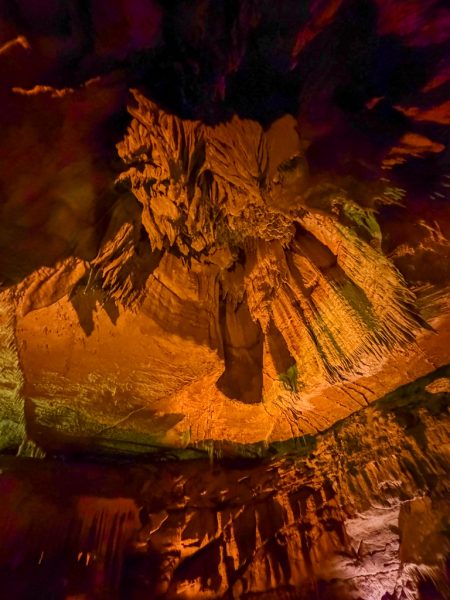
Know Before You Go
- Tickets: $21 per adult when we went.
- Book ahead: Reserve on Recreation.gov and screenshot your QR code. Tours can sell out weeks in advance.
- Arrive early: The park asks you to be at the visitor center at least 30 minutes before your tour.
- Bring a jacket: The cave averages about 54 degrees, even when it’s hot outside.
- Leave it in the truck: No snacks or drinks other than water, no flash photography and no large backpacks.
- No pets: Only service animals are allowed on cave tours, so plan for your dog.
- Bio-security mats: Everyone walks across them after the tour to help protect the bats from white-nose syndrome.
Above Ground: Kentucky’s Dimpled Landscape
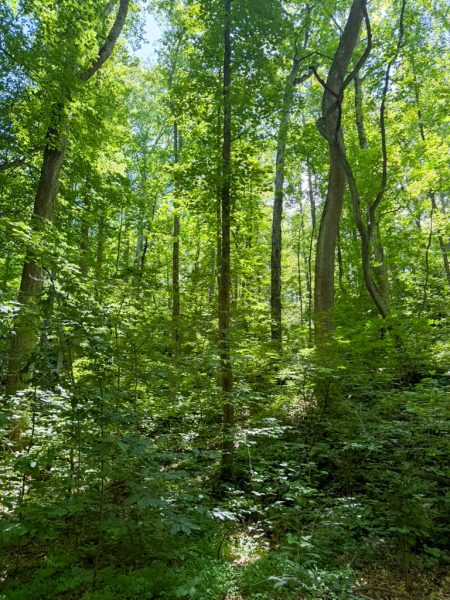
We also spent some time just driving around the area, and once you know what you’re looking at, you see it everywhere. The fields and woods are covered in “dimples,” round dips in the ground where the surface has caved in.
Those dimples are sinkholes, and they’re the giveaway that you’re in karst country. The cave formed some 330 million years ago in thick layers of limestone, capped by sandstone. Over time, water seeping down from the surface dissolves the limestone and carves out the passages below. Every so often, the ground above simply sinks in. Our tour even started in one.
A Little Mammoth Cave Lore
The cave’s history is every bit as interesting as its geology.
- Gunpowder for the War of 1812: The cave was mined for saltpeter, a key ingredient in gunpowder, on an industrial scale. The work was done by enslaved laborers. When the war ended and prices fell, the mining stopped and the cave slowly became a tourist attraction.
- Stephen Bishop: An enslaved guide who started leading tours here in 1838, Bishop was one of the cave’s great explorers. He was among the first to cross the Bottomless Pit, named spots like the River Styx and Fat Man’s Misery, and drew a map from memory that stayed in use for more than 40 years. He was freed in 1856 and died the following year.
- A hospital underground: In 1842 and 1843, a doctor ran a tuberculosis hospital inside the cave, convinced the cave air would cure his patients. It didn’t.
- The Kentucky Cave Wars: As cars brought more tourists, rival cave owners fought hard for their money. Think misleading road signs, and “cappers” who hopped onto car running boards to tell drivers that Mammoth Cave was closed, quarantined or caved in.
- A lot of titles: Mammoth Cave became a national park in 1941, a UNESCO World Heritage Site in 1981 and an International Biosphere Reserve in 1990. In 2021, it was also named an International Dark Sky Park.
Cave City: Wigwams and Roadside Fun
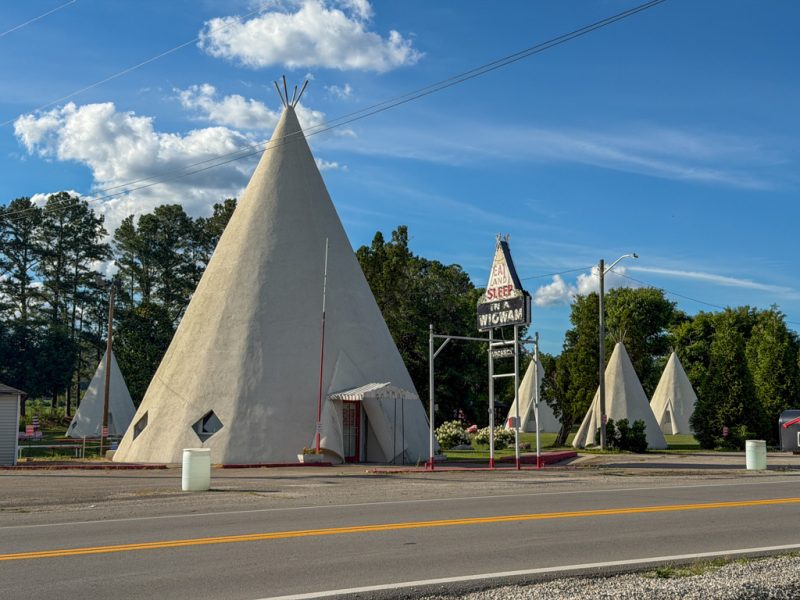
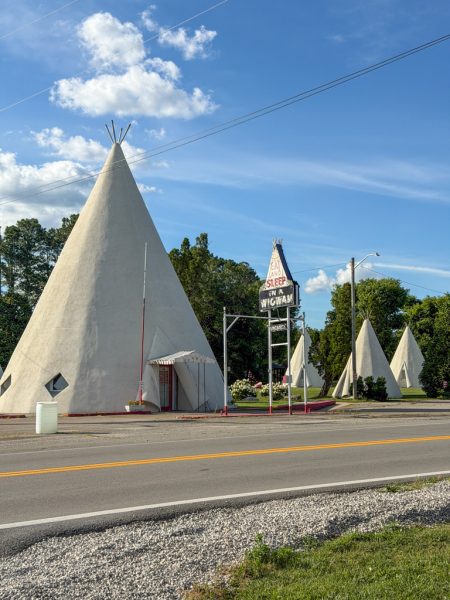
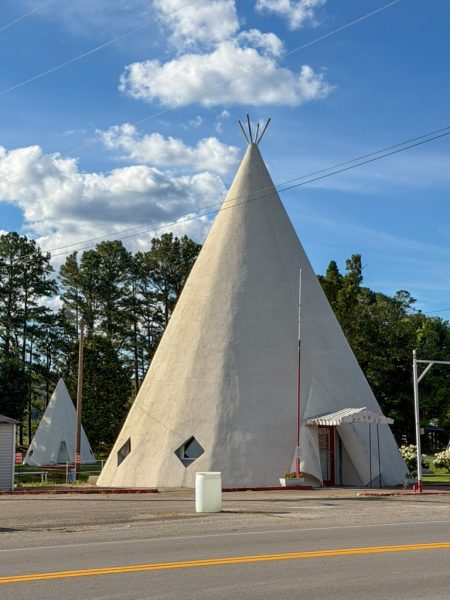
Cave City wears its tourist-town history proudly. Right across the road from our campground is Wigwam Village No. 2, built in 1937: 15 concrete wigwams arranged in a semicircle along old U.S. 31W. It’s on the National Register of Historic Places, and it’s still a motel today. Even if you don’t stay there, it’s worth a slow drive-by (and a photo).
Where We Ate: Buckingham’s Honey & Oak
After the tour, we wandered over to Buckingham’s Honey & Oak in Cave City. It’s the newer successor to a local favorite, Bucky Bee’s BBQ, and it doesn’t have a website, just a Facebook page, so it’s easy to miss.
We ordered The Applewood ($15), their take on a BLT with applewood-smoked bacon and fried green tomatoes on buttery Texas toast. Then the “King Ransom” ($14), a stacked baked potato piled with pulled pork, cheddar, sour cream and bacon. And the Sliced Pork Shoulder ($15): three bone-in slices, smoked and grilled, best with their house-made Chaney Sauce.
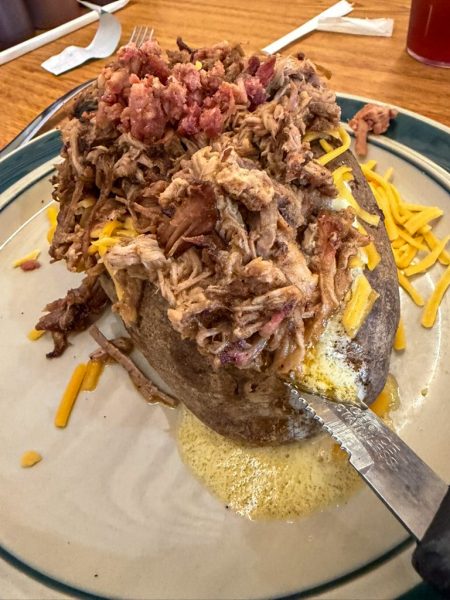
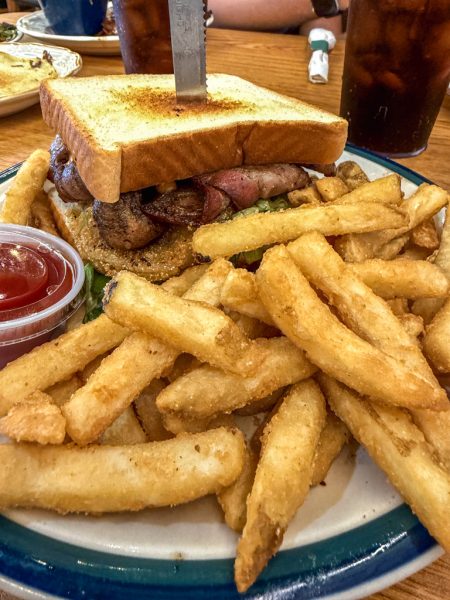
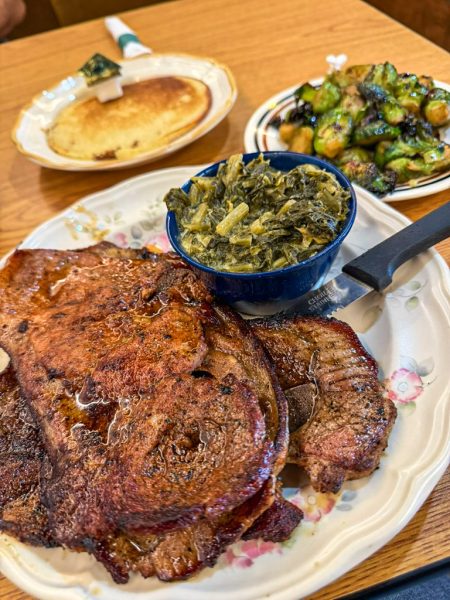
Portions were ample, and we were definitely full afterward. Even though the place was very busy, service was quick and very attentive.
Would We Go Back?
We liked the tour, but for us, caves are a bit of a “see one, see them all” situation. We’re not sure we’d come back just to take another one. As a weekend stop, though? An easy drive, a friendly campground, hearty barbecue and a lot of strange and wonderful history. If you’re road-tripping through Kentucky, it’s well worth a stop.
Lessons Learned
- Reserve your tour early: Popular tours can sell out weeks ahead.
- Dress for 54 degrees: Bring a light jacket and sturdy shoes, whatever the weather is outside.
- Mind your head: Some ceilings are lower than you think.
- Plan for the dog: Pets can’t come on cave tours.
- Look up from the road: The sinkhole “dimples” are half the fun of driving around.
Missed the last stop? Catch up on Kentucky bourbon country by RV. Next up on Oshkosh or Bust: Michigan City, Indiana.
Have you toured Mammoth Cave? Which tour did you take? Tell us in the comments.

Free printable
The Simpler Way RV Trip Planner
The same pages we use to plan every route: stops, drive days, budgets and campground notes. Grab it free: