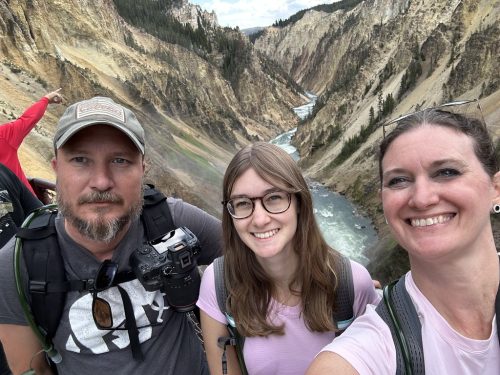
This happened in summer 2026 on the way into Frankfort, Michigan, during our Oshkosh or Bust RV road trip.
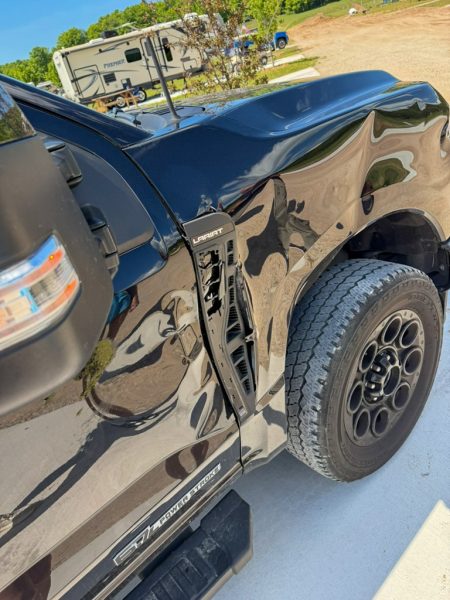
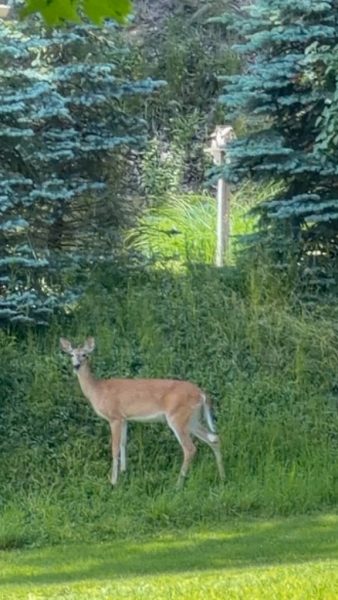
Less than a mile from our campground in Frankfort, Michigan, a deer ran out of the woods right in front of our truck. Everyone (except the deer) was fine. Our F-350, not so much.
It was a Saturday afternoon, we were towing the fifth wheel, and we were about to learn a lot about small-town logistics, police reports and insurance apps. Here’s what happened, what we did, and what we’d tell any RVer who ends up in the same spot. (The rest of our Frankfort stay is here: Frankfort, Michigan.)
What Happened
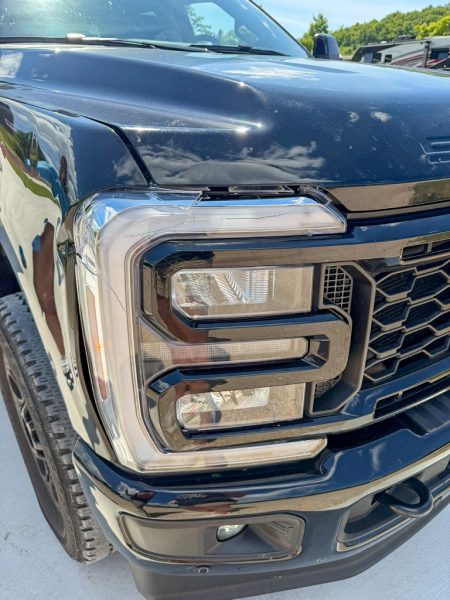
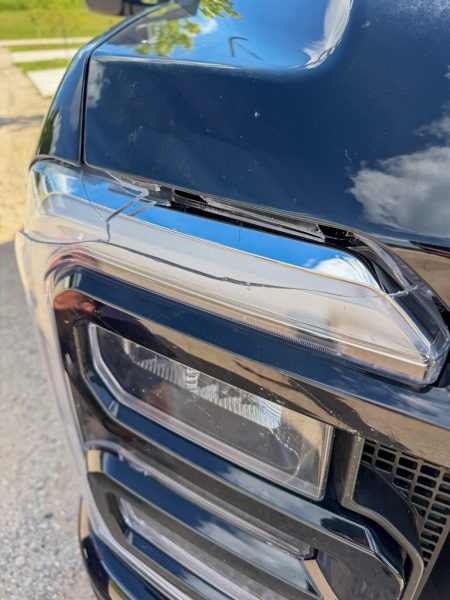
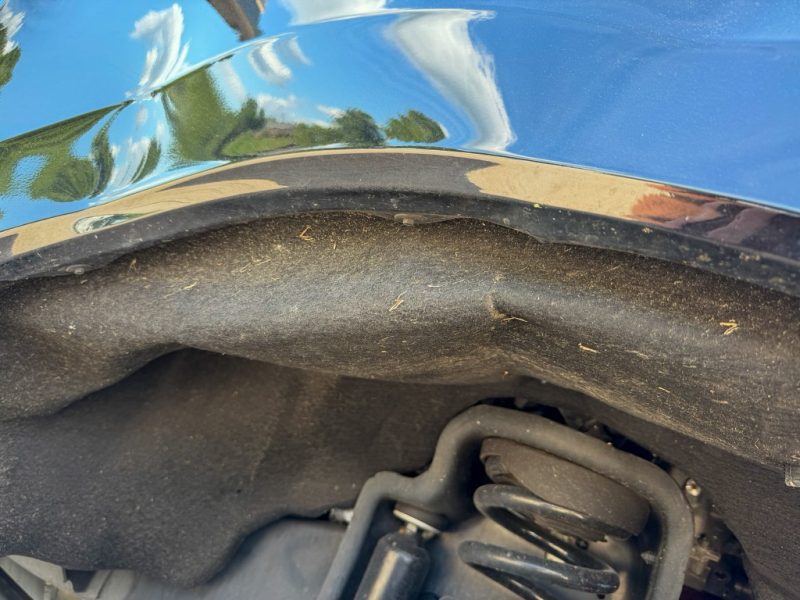
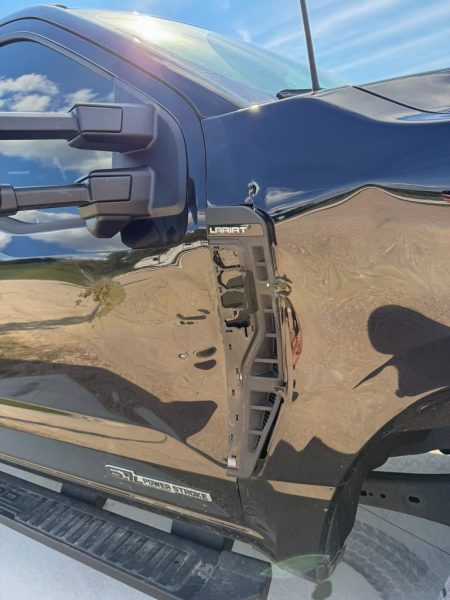
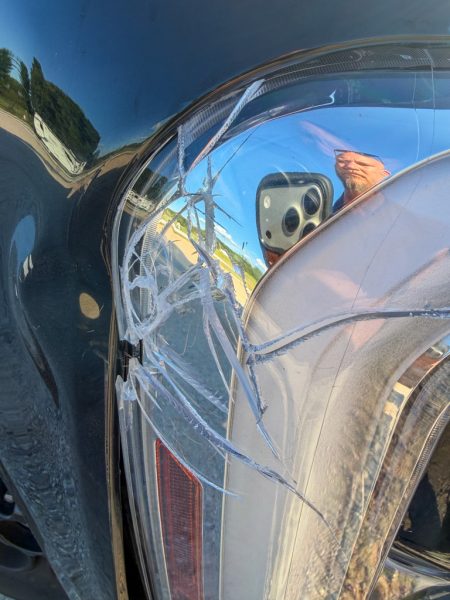
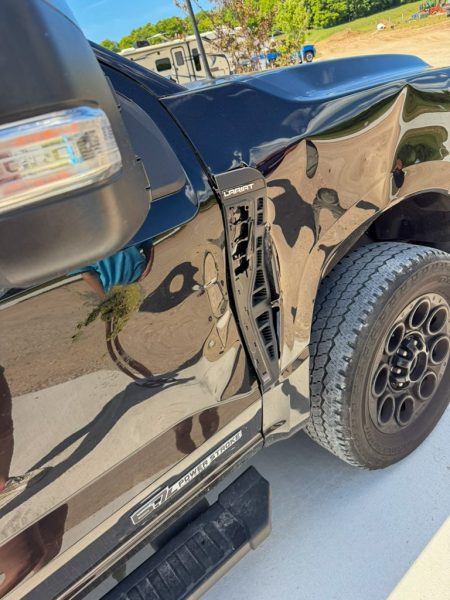
The drive up from Michigan City, Indiana, had been smooth sailing, apart from heavy Fourth of July traffic heading north. Stefan was driving. Then, almost at the campground, the deer. We came away with a busted headlight, a huge dent in the front fender and another dent where the door meets the fender. But the truck still ran.
Welcome to Deer Country
We’re not the only ones. According to the Michigan State Police, the state has nearly 2 million deer, and there were more than 58,000 deer-vehicle crashes in 2024. About 80 percent of those crashes happen on two-lane roads. Deer are most active from April through June and from October through December, and most crashes happen around dawn and dusk.
So we were right in peak season, on a road through the woods. Just not at peak hour: ours happened in the afternoon. Deer don’t read the statistics.
1. Make Sure Everyone Is OK
People and pets first. Our pets ride in the truck with us on travel days, so that was the first check. Thankfully, everyone was fine.
A big shout-out to our F-350, which performed extremely well. Braking with the fifth wheel behind us was smooth and safe. We heard a thump when we hit the deer, but we barely even felt it. That truck is a tank.
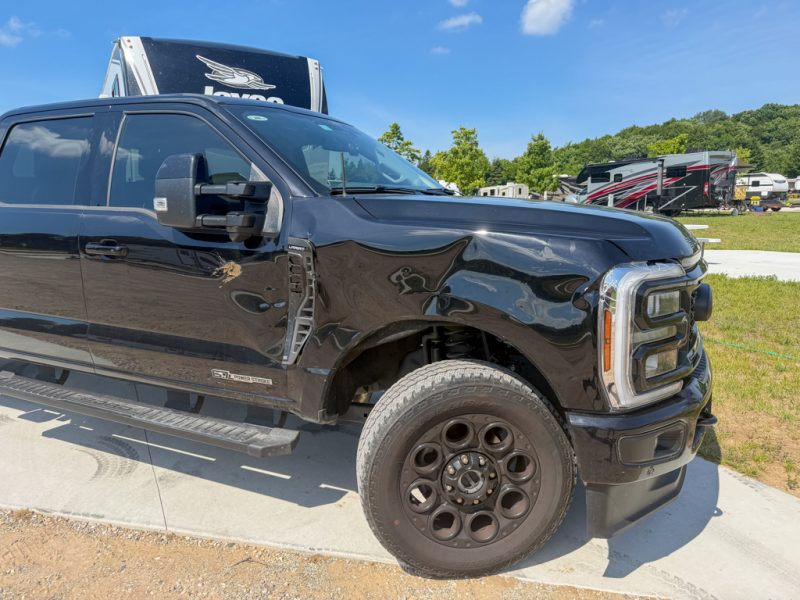
2. Do a Quick Damage Check, Then Decide: Drive or Stay Put?
We did a quick check on the side of the road. The truck ran, and we were less than a mile out, so we decided to drive the final mile. At least we’d be at the campground and not stuck on the shoulder with the rig.
Before you move, look for anything that affects safety: lights, tires, steering, leaking fluids, or body panels rubbing a tire. If anything looks off, or you’re far from your destination, call roadside assistance instead.
3. File a Police Report
When we rolled into the campground, the manager rolled right up in her golf cart and called the police non-emergency line to get someone over. An officer came out to take the report, and the whole thing was a great experience. Up here, they see a lot of deer hits. Get that report: you’ll want it for your insurance claim.
The Question Everyone Asked: “Did You Keep the Deer?”
The campground manager asked if we’d kept the deer. We hadn’t. The police officer asked too. So did the guys at the body shop. Guess we should have!
Turns out that’s a real thing in Michigan. If you hit a deer, you can keep it: notify law enforcement, then fill out the Michigan DNR’s roadkill salvage permit online. The permit is free and gets emailed to you. (Spotted fawns and bear cubs are off-limits.) We’ll leave the venison for next time. Hopefully there isn’t one.
4. Document Everything
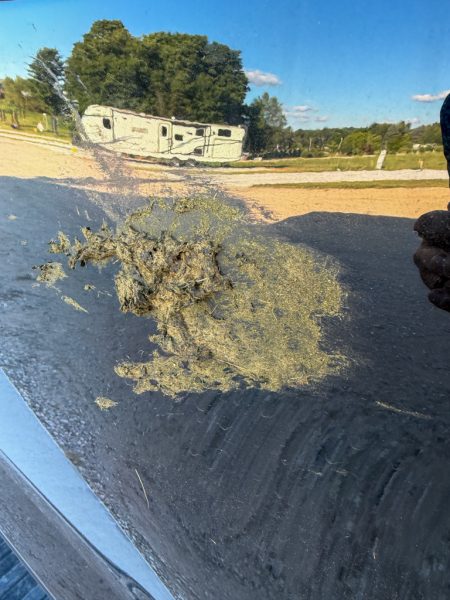
Take photos from every angle, close up and far away. Our dashcam caught the whole thing, and that footage ended up being the key to a fast claim. If you don’t have a dashcam yet, consider this your sign.
Here’s the moment it happened, straight from our dashcam:
5. Don’t Drive It Until Someone Qualified Checks It
The truck ran, but that’s not the same as safe. This is the vehicle that pulls our house down the highway, so we didn’t want to drive it until someone who knows trucks had checked it out.
Dents and scratches can wait. What can’t wait is anything that goes beyond cosmetic. Before you drive any real distance, take a careful walk around and look for:
- Leaking fluids. Check under the front of the truck for drips or puddles: coolant, oil, power steering, transmission or brake fluid. A deer hit can easily crack a radiator or a line.
- Steering. Is the steering wheel off-center, or does the truck pull, wobble or feel different? Anything bent in the steering or suspension is a stop sign.
- Tires and wheels. Look for cuts, bulges, bent rims, or a fender or bumper pushed in against a tire.
- Anything hanging, dragging or rubbing. Loose trim, a bumper hanging low, or a panel scraping a wheel can come off or make things worse at highway speed.
- The hood. Make sure it still latches securely. A hood flying up at speed is the last thing you need.
- Lights and warning lights. You need working headlights and turn signals to drive legally, especially when towing. And pay attention to any new warning lights on the dash.
Ours had a busted headlight, a big dent in the fender and a dented door. Ugly, but nothing leaking, nothing bent that mattered, and the tires and wheels were fine. Still, we waited for a pro to confirm it before we drove anywhere.
6. Plan on Being Stuck (Especially on a Weekend)
It was Saturday afternoon, and no shops would open until Monday morning. There was no taxi service, no rental car place and no Uber available. So we were stuck for the weekend.
The upside of RV life: your house is right there with you. We cooked, caught up on things and went for a run into town, which turned out to be a lovely way to meet Frankfort.
7. Find a Good Local Shop
Monday morning we called around and found Heiges Body Shop. Two guys told us to drive over carefully and they’d have a look. They were waiting outside when we pulled in, gave the truck a good once-over and told us: “She’ll drive fine for the rest of the trip. She won’t be pretty, but she is safe to drive.”
8. Get a Second Opinion
When you’re towing, a second set of eyes doesn’t hurt. We’d tried to get the truck checked in Traverse City before the holiday, so once we reached St. Ignace we booked an appointment at Sarah Jones Ford. They dropped us back at the KOA while they worked, and we walked about half a mile to pick it up. They gave the truck a thorough inspection, and it came back in great shape. They see a lot of deer hits up there, and at first they assumed we were in for body work.
9. Insurance: Skip the App Spiral and Email Your Agent
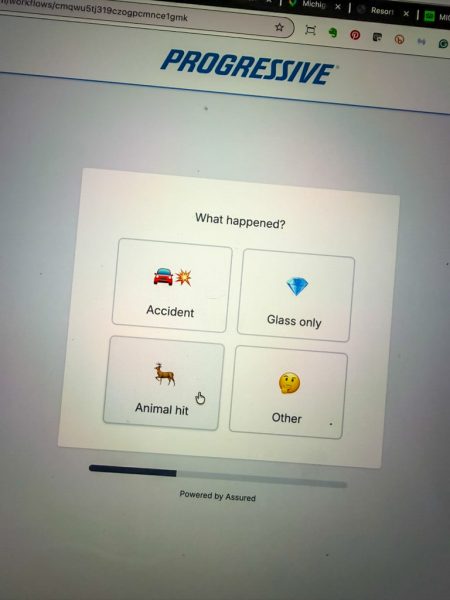
We filed the claim online the same afternoon and submitted our pictures. Then the emails started. Could we send more details? More pictures? And then the questions:
- “Was the sun in your eyes?” No.
- “Were there warning signs?” No. (We actually rewatched the dashcam to check.)
- “Were you speeding?” No. The dashcam proved it again: 2 miles under the speed limit.
- “Did you use cruise control at all during the trip?” During the trip? Yes. Here? No.
We must have gotten four or five rounds of questions over the weekend. So Monday morning, we emailed our insurance agent directly with the photos and the dashcam footage. From there, the claim was approved virtually, and very fast.
Our takeaway: file right away, but if the online system turns into an endless loop, go straight to your agent. And keep that dashcam footage handy. It answered just about every question they asked.
10. Be Ready to Live With It for a While
Repairs would have taken weeks we didn’t have. So we finished the trip looking a little rickety: a huge dent in the fender, a headlight held together with tape, and a door that stuck and squeaked every single time we opened it. The repairs waited until we got back to South Florida and took a little over two weeks.
How to (Try to) Avoid a Deer Strike
Sometimes there’s nothing you can do. A deer jumps out, and that’s that. But the Michigan State Police has some good advice that’s worth keeping in mind, especially when you’re towing:
- Don’t swerve. The most serious deer crashes happen when drivers swerve and hit another vehicle or a tree, or roll over. With several tons of fifth wheel behind you, that goes double. Brake firmly and stay in your lane.
- Slow down on wooded two-lane roads, especially around dawn and dusk and during spring and fall.
- Stay alert and scan the roadsides. Deer often travel in groups, so if one crosses, expect another.
- Don’t let your guard down at the end of a travel day. Ours happened less than a mile from the campground.
Our Quick Checklist
- Check on people and pets
- Do a quick safety check before you move
- File a police report
- Decide whether you want to keep the deer (in Michigan, it’s a free DNR salvage permit)
- Photos plus dashcam footage
- Don’t drive far until a pro has looked at it
- Expect small towns to be slow on weekends
- Email your insurance agent directly
- Get a second opinion if you’re towing
Have you ever hit a deer on an RV trip? Tell us what you learned in the comments.

Free printable
The Simpler Way RV Trip Planner
The same pages we use to plan every route: stops, drive days, budgets and campground notes. Grab it free: