We crossed the Mackinac Bridge with our fifth wheel in July 2026, during our Oshkosh or Bust RV road trip.
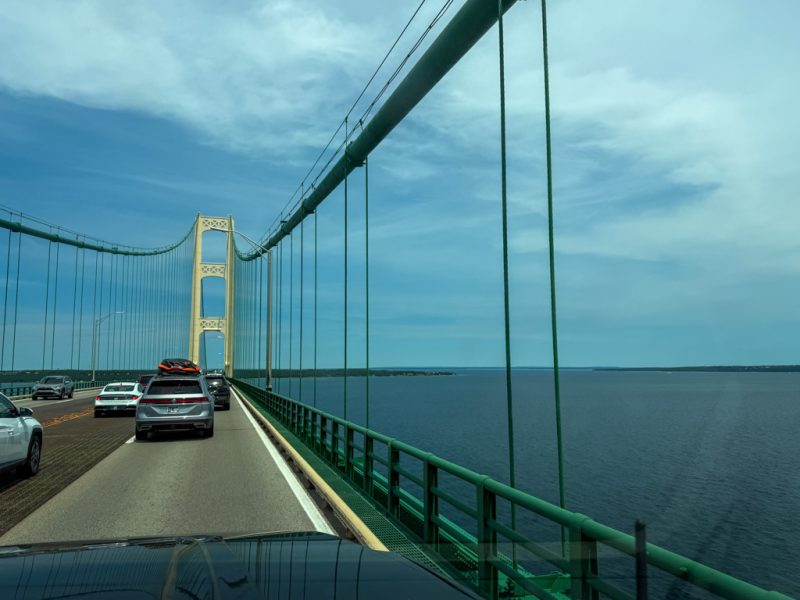
We crossed the Mackinac Bridge for the first time on our drive from Frankfort to St. Ignace, towing the fifth wheel. I drove, so my eyes stayed on the lane, but I still caught glimpses of the water on both sides. It was amazing. We had very little wind that day, which helped. Here’s what we learned, plus what we looked up so you don’t have to.
The Mighty Mac in a Nutshell
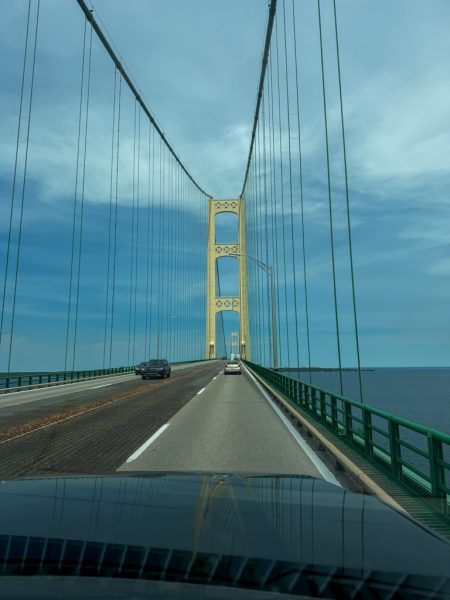
The Mackinac Bridge opened in 1957. It connects Mackinaw City in the Lower Peninsula with St. Ignace in the Upper Peninsula, across the Straits of Mackinac, where Lake Michigan meets Lake Huron. It’s about five miles long (26,372 feet) and is the longest suspension bridge between anchorages in the Western Hemisphere. Michiganders call it the Mighty Mac.
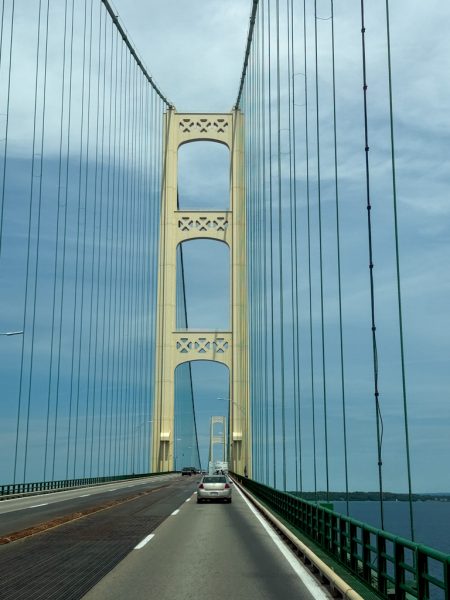
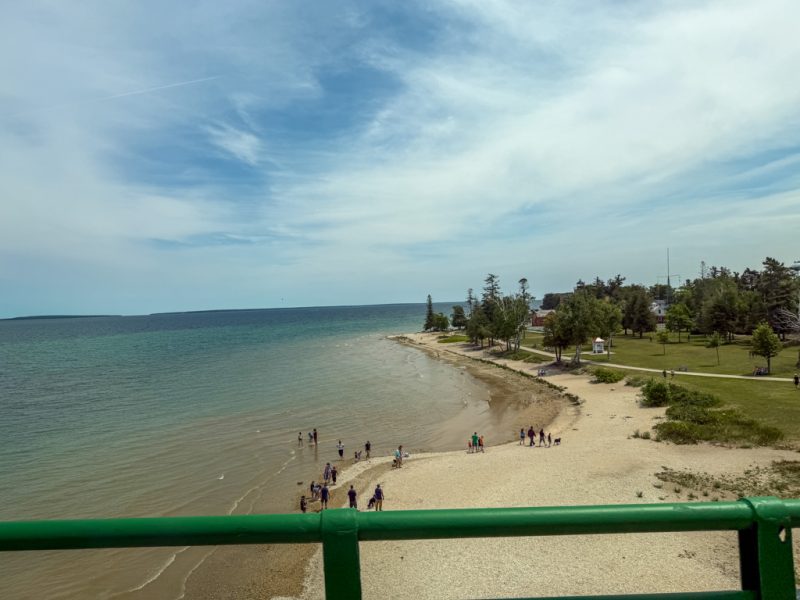
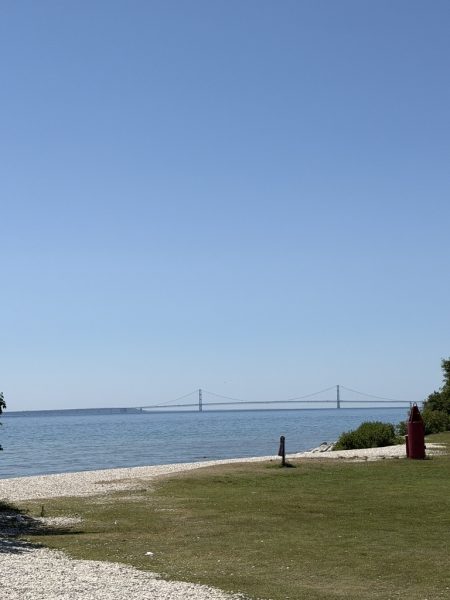
It’s an absolutely beautiful bridge, and we loved catching glimpses of it from various points in St. Ignace and Mackinac Island. You can also take a boat or ferry under the bridge if you want a closer look.
What It Costs
Tolls are charged per axle:
- Passenger vehicles, including pickups: $2 per axle.
- Motor homes and other vehicles: $5 per axle.
- Anything you’re towing: charged at the lead vehicle’s per-axle rate. The one exception is a motor home towing a car, where the car pays the car rate.
So for a pickup and fifth wheel like ours, it’s $2 for every axle on the road, roughly $8 to $10 depending on your rig. We paid $8. You can pay with cash, a credit card, Apple Pay or Google Pay, or a MacPass if you cross often. Cash and mobile pay are the quickest. Rates change, so check mackinacbridge.org before you go.
Wind
This is the big one for RVers. High-profile vehicles catch a lot of wind up there. When it picks up, the Bridge Authority issues high-wind warnings, and in stronger winds it may escort high-profile vehicles across or hold them until conditions improve. During a warning, drivers are asked to turn on their headlights, slow down and use the outside lane. Check the Bridge Authority’s website or social media for current conditions before you head out.
Inside Lane or Outside Lane?
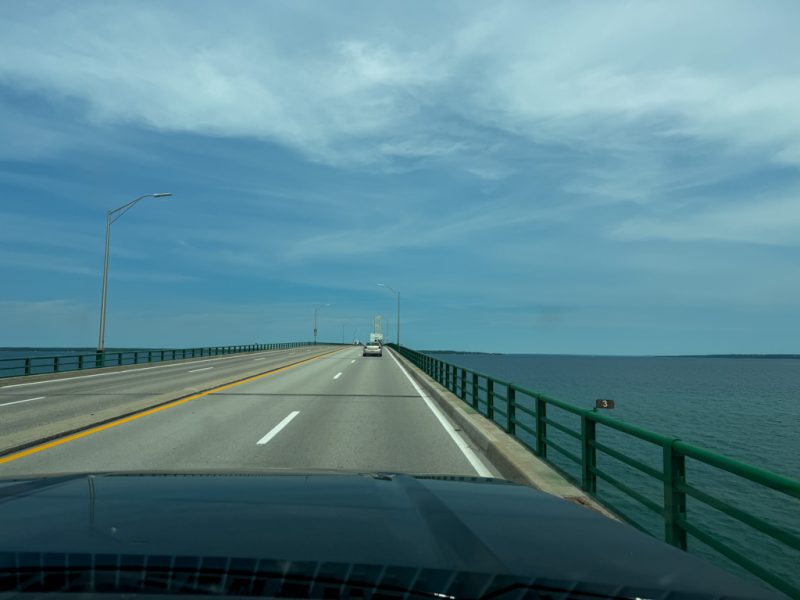
The two inside lanes are open steel grating, so you can see the water through them. The outside lanes are solid pavement.
With the RV in tow, we mostly stayed in the outside lane. Going over the grates was a bit weird, mostly because they feel different under your tires, with little ridges. We took our time and stayed under the speed limit, while the folks who probably drive the bridge every day didn’t seem intimidated at all.
If You’d Rather Not Drive It
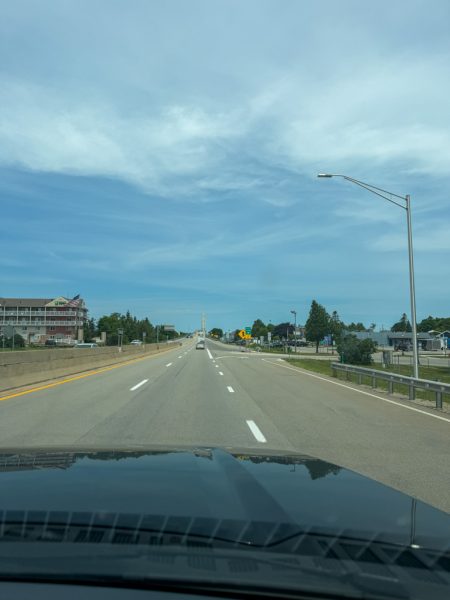
Nervous about heights? The bridge has a Driver Assistance Program: a trained driver takes your vehicle across while you ride along, for about $10.
When to Cross
Holiday weekends bring a lot of traffic, and the annual Labor Day Bridge Walk affects traffic for part of that day, so plan around it. Otherwise, the best time is whenever the wind is calm.
Quick Checklist
- Check wind conditions and any warnings before you leave.
- Count your axles and have cash or your phone ready.
- Headlights on, speed down.
- Let the passenger do the sightseeing.
More from this stop: our week in St. Ignace, Mackinac Island in a day and our KOA campground review.
Have you driven the Mighty Mac? Inside lane or outside? Tell us in the comments!

Free printable
The Simpler Way RV Trip Planner
The same pages we use to plan every route: stops, drive days, budgets and campground notes. Grab it free: