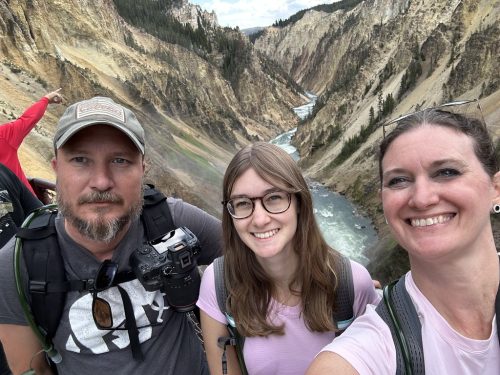
We visited Custer State Park and the Black Hills in June 2025, the fourth stop of our Wild West Loop RV road trip.
After the Badlands, we pointed the truck west toward the Black Hills. Custer State Park had been on our list for years. It was South Dakota’s first state park, established in 1919, and its 71,000 acres of granite peaks, pine forest and open prairie are home to one of the largest publicly owned bison herds in the world, somewhere around 1,300 to 1,500 animals. It’s also surrounded by big-name stops (Mount Rushmore, Crazy Horse, Needles Highway, Wind Cave), so it’s easy to try to cram it all in. We didn’t quite manage everything, but we got a good taste of the area and a much better idea of how we’d do it next time.
Here’s what we saw, what was worth it, what wasn’t, and the one road I’d tell every RVer to skip in their rig.
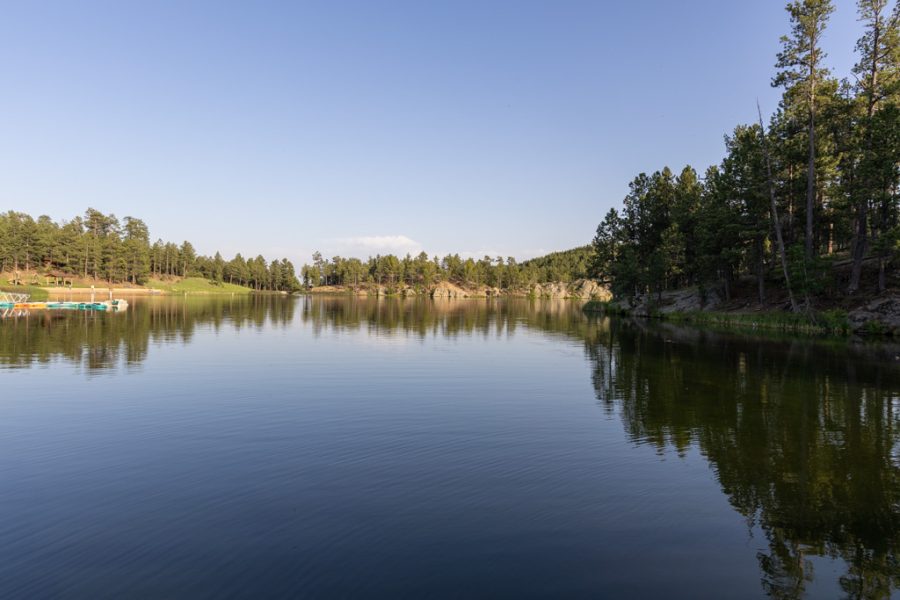
The Drive From the Badlands: Rapid City and a White-Knuckle Finish
We gave ourselves a leisurely late-morning start out of Interior. After days of wide-open prairie and quiet roads, rolling through Rapid City was a bit of a culture shock: traffic, stoplights, big-box stores, the works.
The last stretch is where it got interesting. Our route took us through Custer State Park itself, and the road is steep, narrow and winding, with tight curves and not much shoulder. Towing a fifth wheel through there is not for the faint of heart, but Tiff drove it like a champ. (Yes, I’m giving myself that one.)
RV tip: Check your route into the Black Hills carefully before you go. Some park roads have tunnels and tight switchbacks that big rigs can’t handle, and your GPS doesn’t always know that.
Crazy Horse Memorial: A Work in Progress
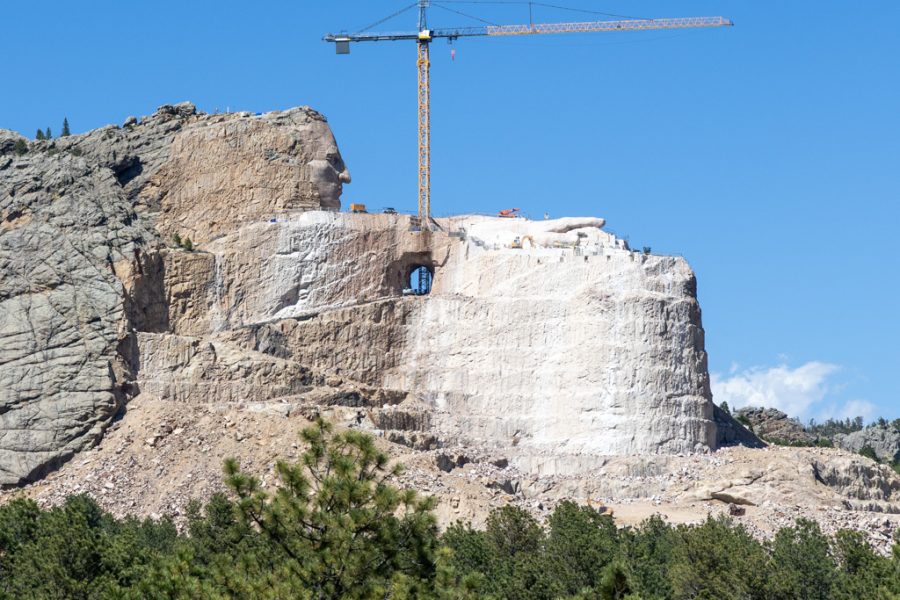
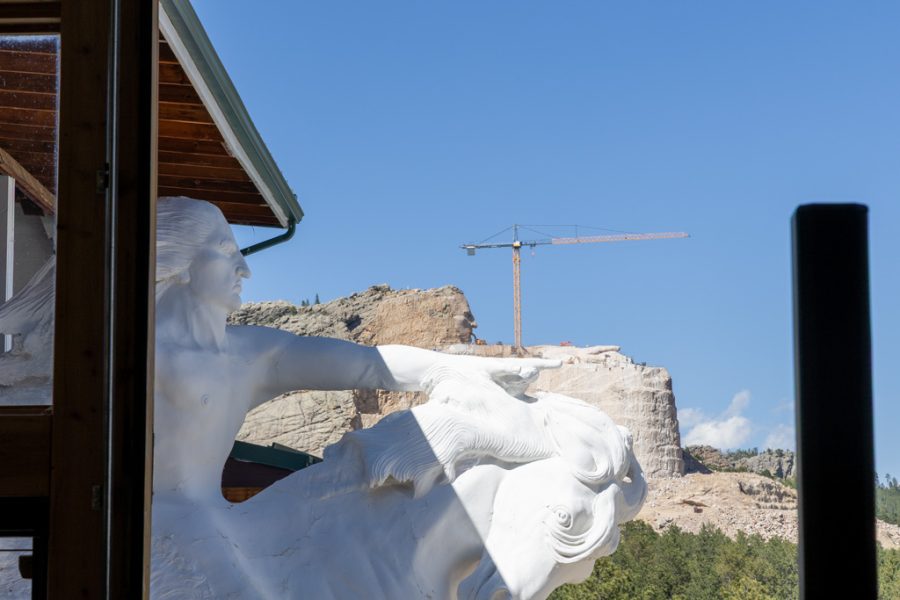
Our first stop was Crazy Horse Memorial, and the backstory is worth knowing before you go. In the 1940s, Lakota elder Henry Standing Bear invited sculptor Korczak Ziolkowski, who had worked on Mount Rushmore, to carve a memorial to the Lakota leader Crazy Horse. The first blast went off in 1948, and the face, finished in 1998, is nearly 88 feet tall on its own. When it’s complete, the carving is planned at 641 feet long and 563 feet high. The project has never taken federal or state money; it runs on admissions and donations, which is a big part of why it’s still a work in progress more than 75 years later.
Admission was $30 for our car, and we came away with mixed feelings. The vision is impressive, but from the viewing area you mostly see the face and a whole lot of mountain still waiting for its turn, and we were hoping for a little more from the museum. It’s one of those places where knowing the history ahead of time makes the visit more meaningful.
Good to know: The memorial isn’t dog friendly, so plan for pups to stay back at camp. The parking lot is RV friendly if you’re stopping on a travel day.
Mount Rushmore: Look, See, Leave
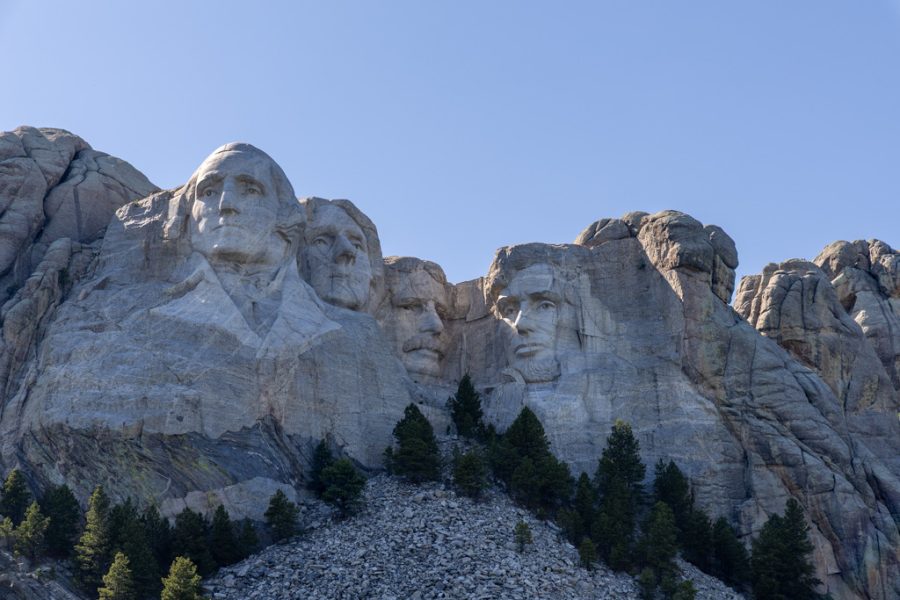
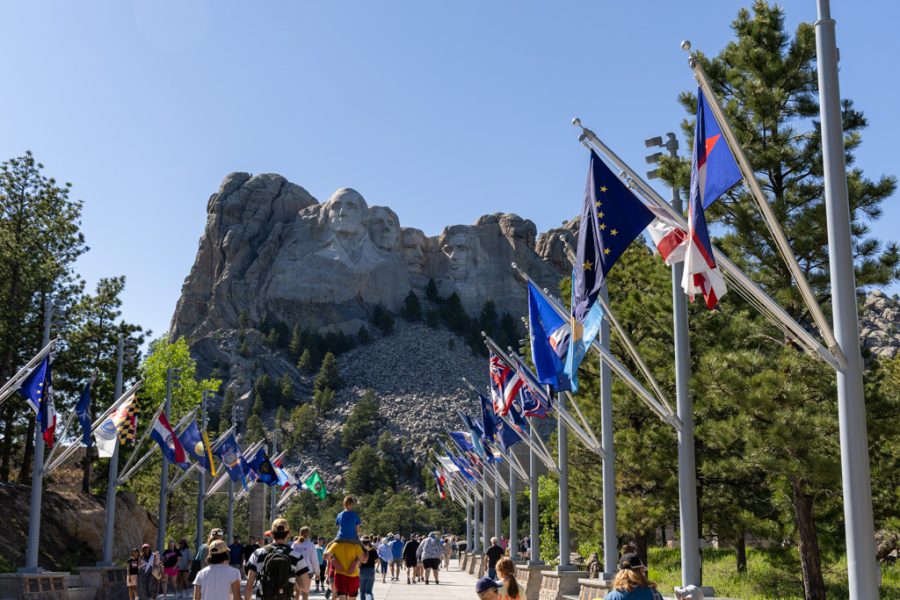
Mount Rushmore was a bucket-list stop for Stefan, and there’s something about seeing it in person after a lifetime of seeing it in pictures. Sculptor Gutzon Borglum and hundreds of workers carved it between 1927 and 1941, and his son Lincoln finished the job after Borglum died that spring. Each face is about 60 feet tall, and each president stands for a chapter of the country’s story: Washington for its founding, Jefferson for its expansion, Theodore Roosevelt for its development and Lincoln for its preservation.
We kept our visit short and sweet, about 30 minutes, and that felt just right for us. We walked the Avenue of Flags, lined with the flags of every state and territory, took in the view from the Grand View Terrace, and got our photos.
A few things to know: parking is $10 and isn’t covered by the America the Beautiful pass, since the lot is run by a concessionaire rather than the Park Service. It gets busy, with tour buses coming and going, so earlier in the day is better. The walkways are paved and easy, and there’s RV parking, which we appreciated.
Needles Highway: Gorgeous, But Leave the RV at Camp
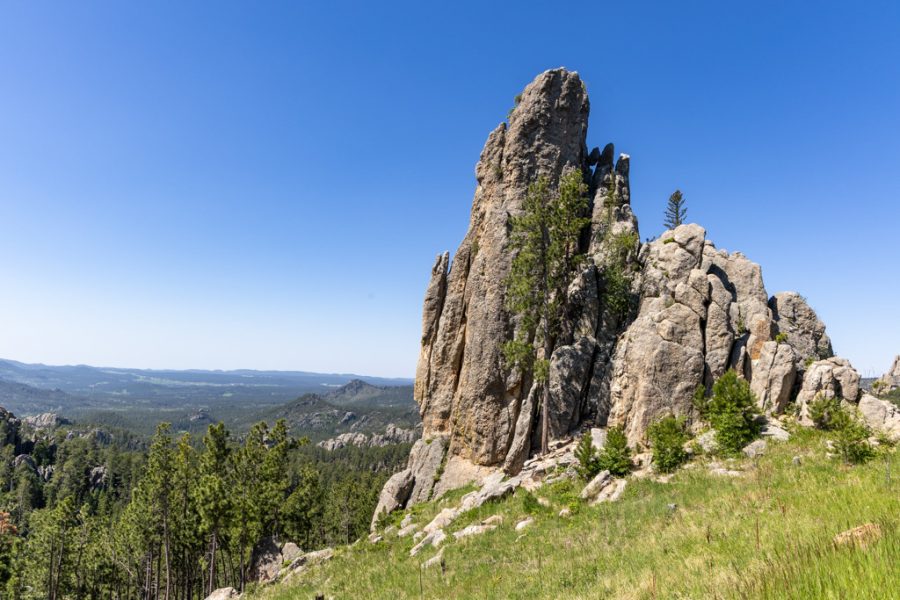
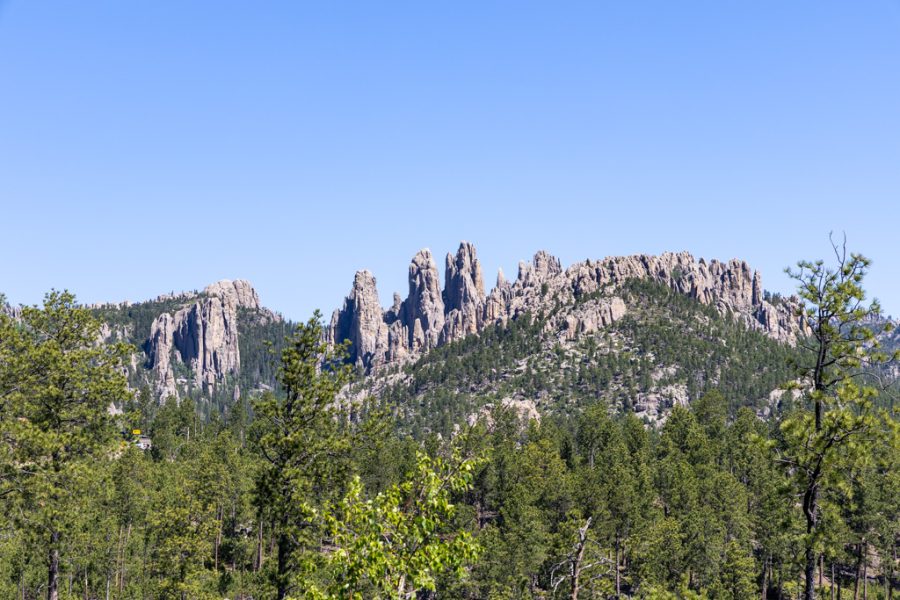
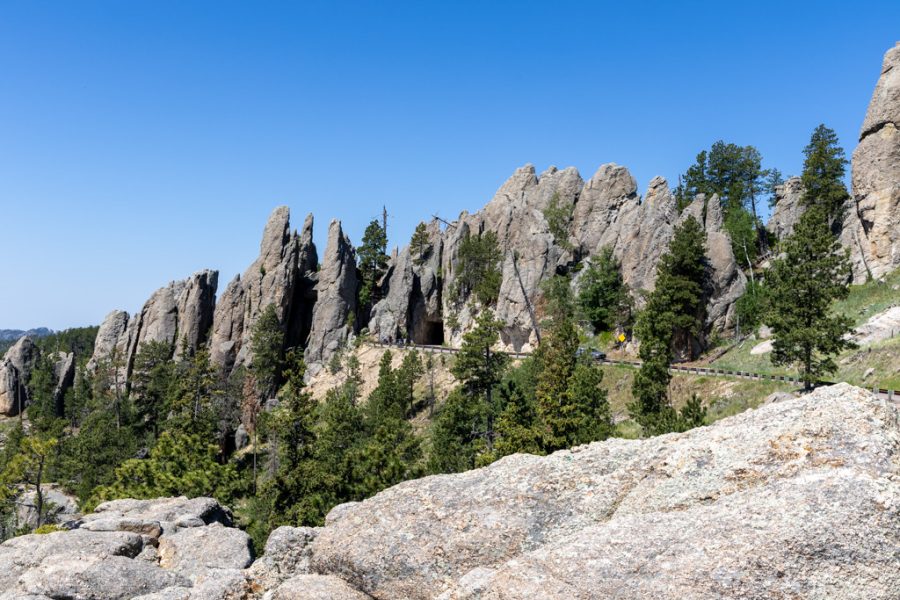
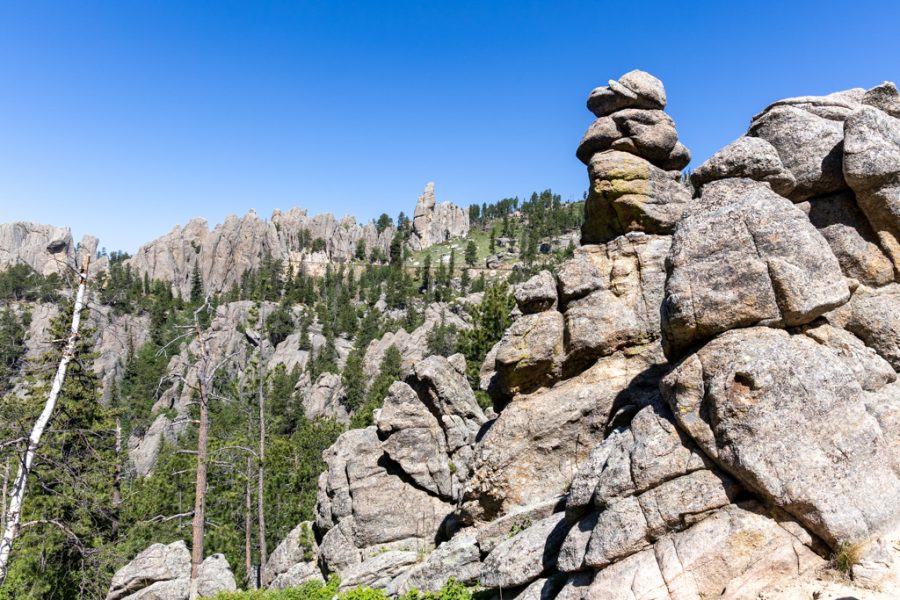
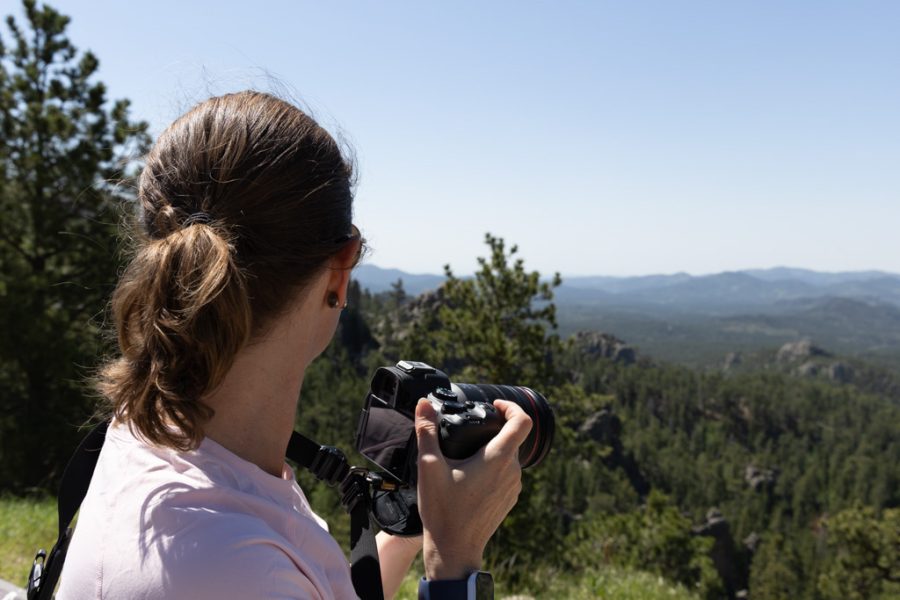
We planned to do a hike along Needles Highway, but Mack wasn’t feeling great that day, so we turned it into a scenic drive instead. The road was Governor Peter Norbeck’s pet project; he’s said to have scouted much of the route himself, and it was completed in 1922. The views are stunning: granite spires, pine forest and long looks out across the Black Hills. The Cathedral Spires are a highlight.
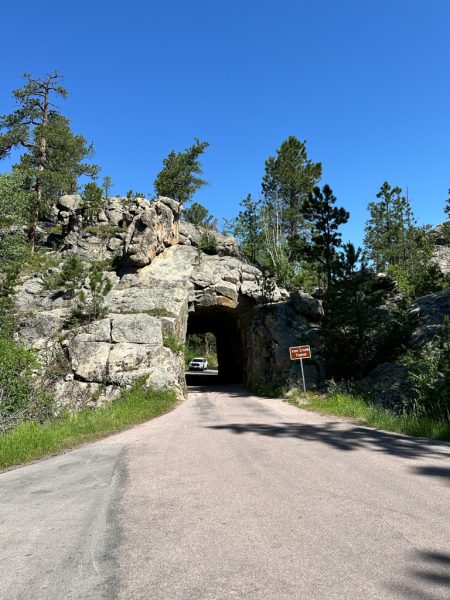
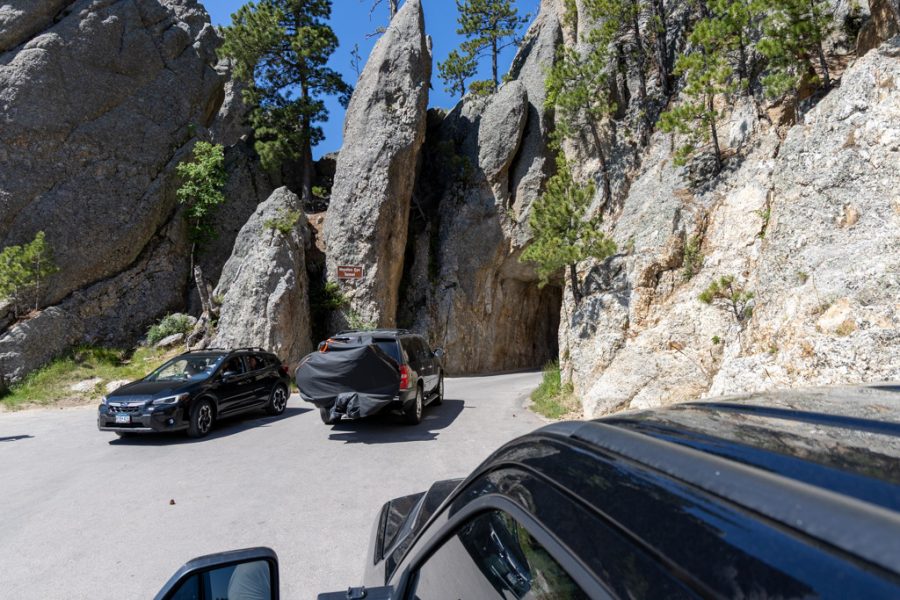
That said, this is not an RV road. The 14-mile highway has two very narrow tunnels. Needles Eye Tunnel is only 8 feet wide and 9’9″ high, and Iron Creek Tunnel is 8’9″ wide and 10’10” high. Even in the truck, squeezing through felt tight. Add in the hairpin curves, summer traffic and limited parking at the overlooks, and it’s an easy pass for anything bigger than a car or pickup.
Heads up: All those twists and turns can get to you. If anyone in your crew gets carsick, take it slow and plan a few stops.
Lunch in Custer: Calamity Jane’s at the Gold Pan Saloon
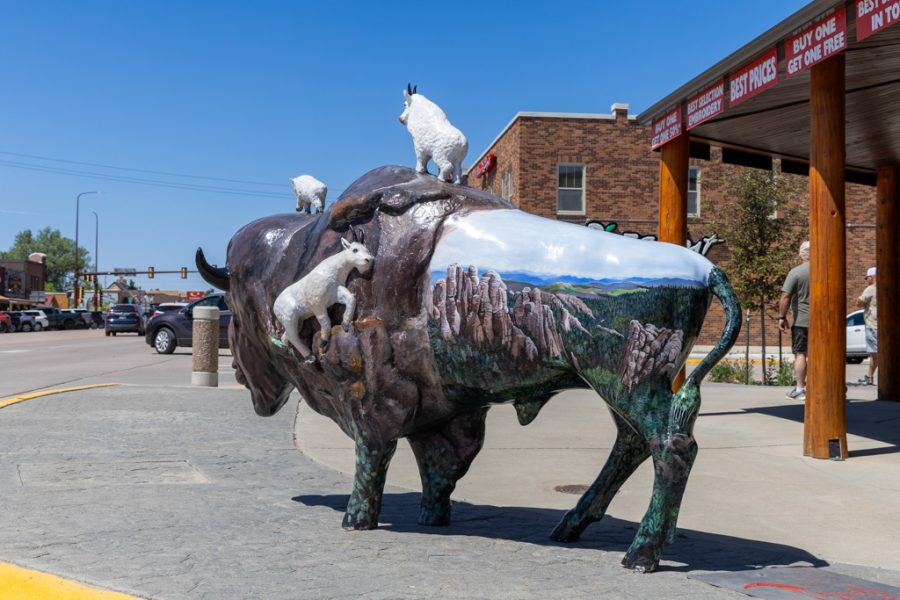
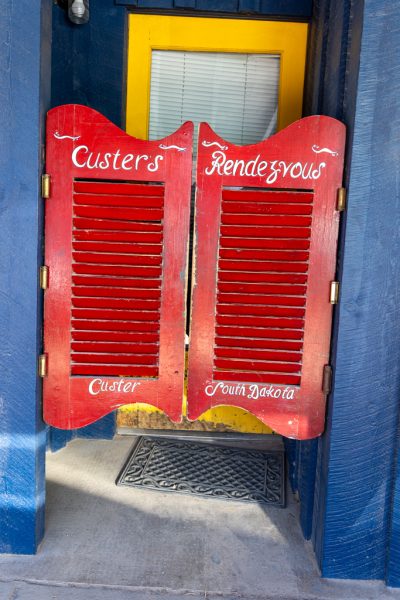
The town of Custer is touristy in a fun way, with lots of t-shirt shops and country music blaring onto the sidewalks. It gave me Key West vibes, just with cowboy boots instead of flip-flops.
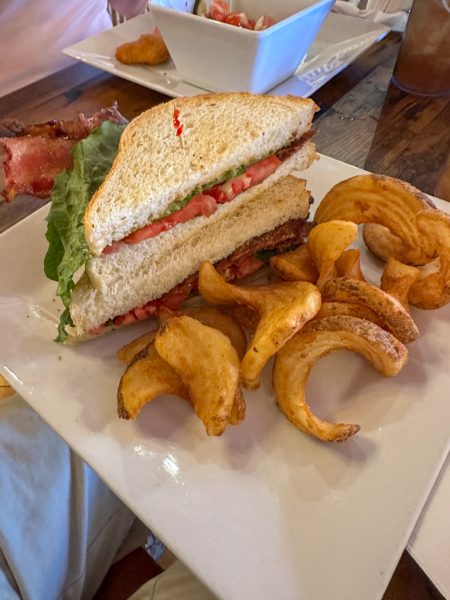
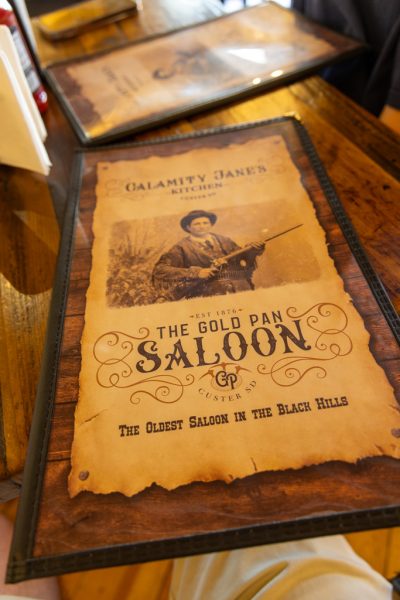
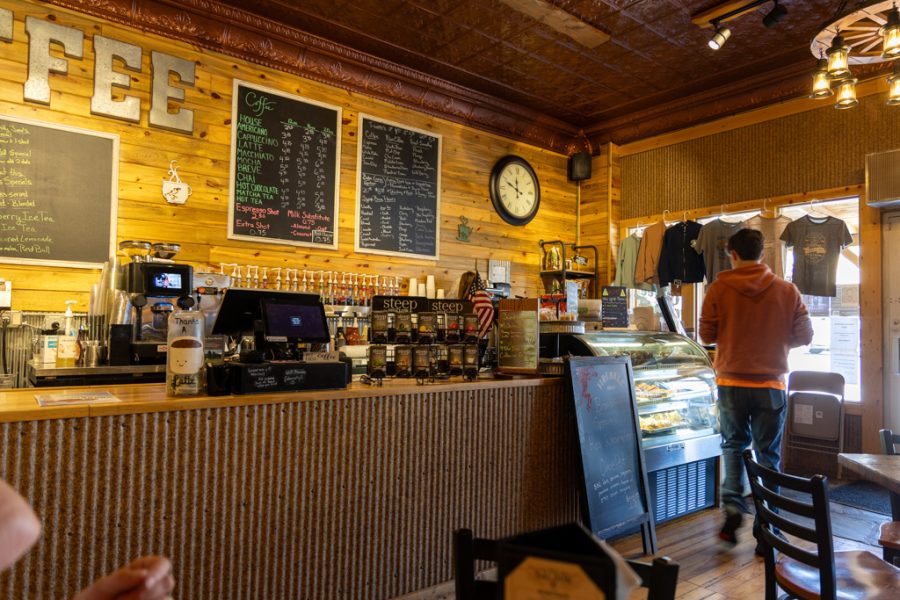
We found lunch at Calamity Jane’s, the little coffee shop attached to the Gold Pan Saloon, which bills itself as the oldest saloon in the Black Hills. It turned out to be one of our favorite meals of the trip. We had BLTs with thick, smoky bacon, a crunchy walleye sandwich, a fresh cucumber-tomato salad that tasted almost like ceviche, and hand-cut fries. Service was slow, but the space made up for it: tin ceilings and walls covered in old photos of Wild Bill, Calamity Jane and Deadwood history. It felt like a local gem, and we’d go back in a heartbeat.
After lunch, our truck was covered in a thick layer of Black Hills dust, so we made a quick stop at a self-serve car wash in town before heading back out.
The Wildlife Loop: Prairie Dogs, Pronghorn and Begging Burros
The Wildlife Loop Road is an 18-mile paved drive through open prairie valleys in the southern part of the park. It was hot (around 90 degrees), but the crowds were light, which made it an easy, relaxed drive.
We didn’t see a single bison, which was a little disappointing given that Custer State Park is famous for its herd. We did spot a few deer and pronghorn, and the prairie dogs were out in full force, popping up and chattering at us like they owned the place (they kind of do).
The real stars were the burros. These donkeys are descendants of the ones that once carried visitors up Black Elk Peak, and they know exactly what cars mean: snacks. They walk right up to your window looking for handouts. Getting to pet one was hands down my favorite moment of the day. Sadly, we saw a lot of people feeding them, which isn’t allowed and isn’t good for them. Pet them, take your pictures, and keep the snacks in the car.
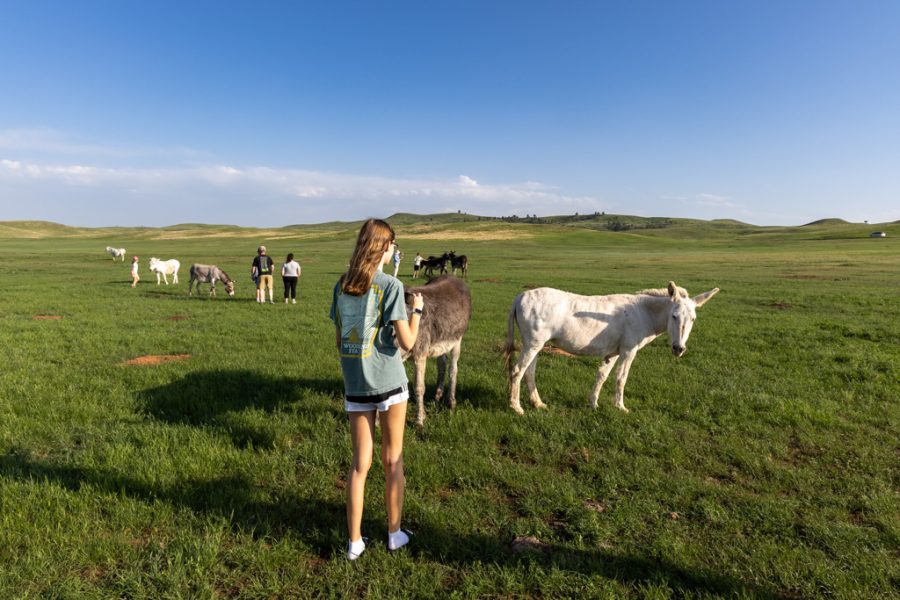
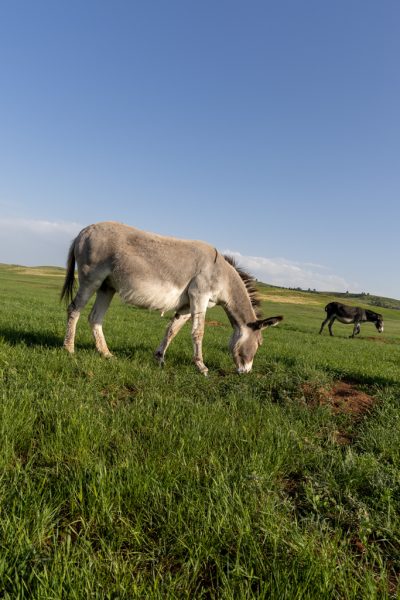
Good to know: There are no bathrooms along the loop, so plan ahead.
Back at Camp: Hardly Roughing It
Back at camp, we had a sous vide teriyaki dinner prepped and waiting. Camping with all the comforts of home is hardly roughing it, and after a hot day of driving, I wasn’t complaining one bit.
Before moving on, we restocked at Lynn’s Dakotamart in Custer, which, to Stefan’s delight, carries German candy. It’s the little things.
Our Favorite Stops
- The Wildlife Loop: Easy, paved, and the burros alone make it worth it.
- Lunch at Calamity Jane’s: Smoky bacon, crunchy walleye and a whole lot of Old West atmosphere.
- Needles Highway (in the truck, not the RV): Some of the most dramatic scenery in the Black Hills.
- Mount Rushmore: Quick, iconic, and checked off Stefan’s bucket list.
Good to Know
- Mount Rushmore parking is $10 and not covered by the annual National Parks pass.
- Crazy Horse is not dog friendly, but it does have RV-friendly parking.
- Needles Highway tunnels are 8 feet wide at their narrowest. Leave the RV at camp.
- There are no bathrooms on the Wildlife Loop.
- Don’t feed the burros (or any of the wildlife).
- Custer State Park requires its own entrance license; the National Parks pass doesn’t cover it. A 7-day vehicle license is $25, or you can use a South Dakota annual state park pass.
Wish List for Next Time
- Bring the Bronco and explore the park’s backcountry gravel roads.
- Drive the Wildlife Loop early in the morning or near sunset, when it’s cooler and the animals (hopefully the bison!) are more active.
- Hike along Needles Highway, maybe out to the Cathedral Spires.
- Visit Wind Cave National Park, just south of Custer State Park.
- Stay inside Custer State Park itself.
Where We Stayed
We stayed at Custer’s Gulch RV Park & Campground, just outside the town of Custer. It had full hookups, level gravel pads, clean bathrooms, and quiet, dark nights, and it put us about 20 minutes from Custer State Park, Mount Rushmore, Crazy Horse and Wind Cave. It worked well as a base, though next time we’d love to try one of the campgrounds inside the park.
→ Read our full Custer’s Gulch RV Park review
Lessons Learned on This Leg
- Research park roads before you drive them in an RV. Not every scenic drive is rig friendly.
- Not every famous stop needs a full day. Some are look, see, leave, and that’s okay.
- Midday in summer is the worst time to look for wildlife. Go early or late.
- The best meals are often the ones you stumble into.
Final Thoughts
Custer State Park and the Black Hills packed a lot into a short stop. Some of the big-name attractions didn’t wow us as much as we expected, but the burros, the scenery along Needles Highway and a surprisingly great lunch in Custer more than made up for it. We left with a long list of things we still want to do, which is always a good sign.
Next up: Devils Tower. Follow the whole Wild West Loop here.
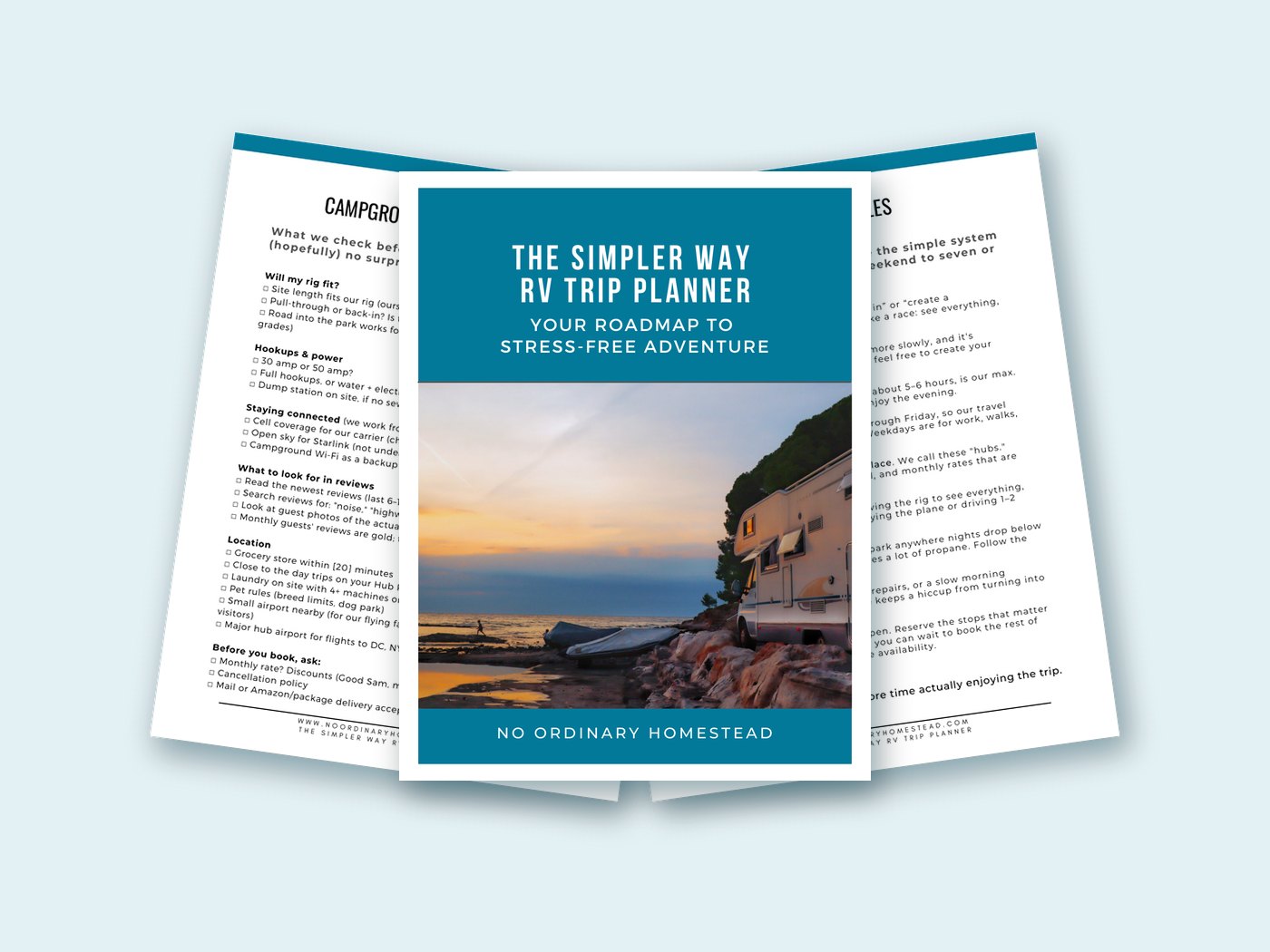
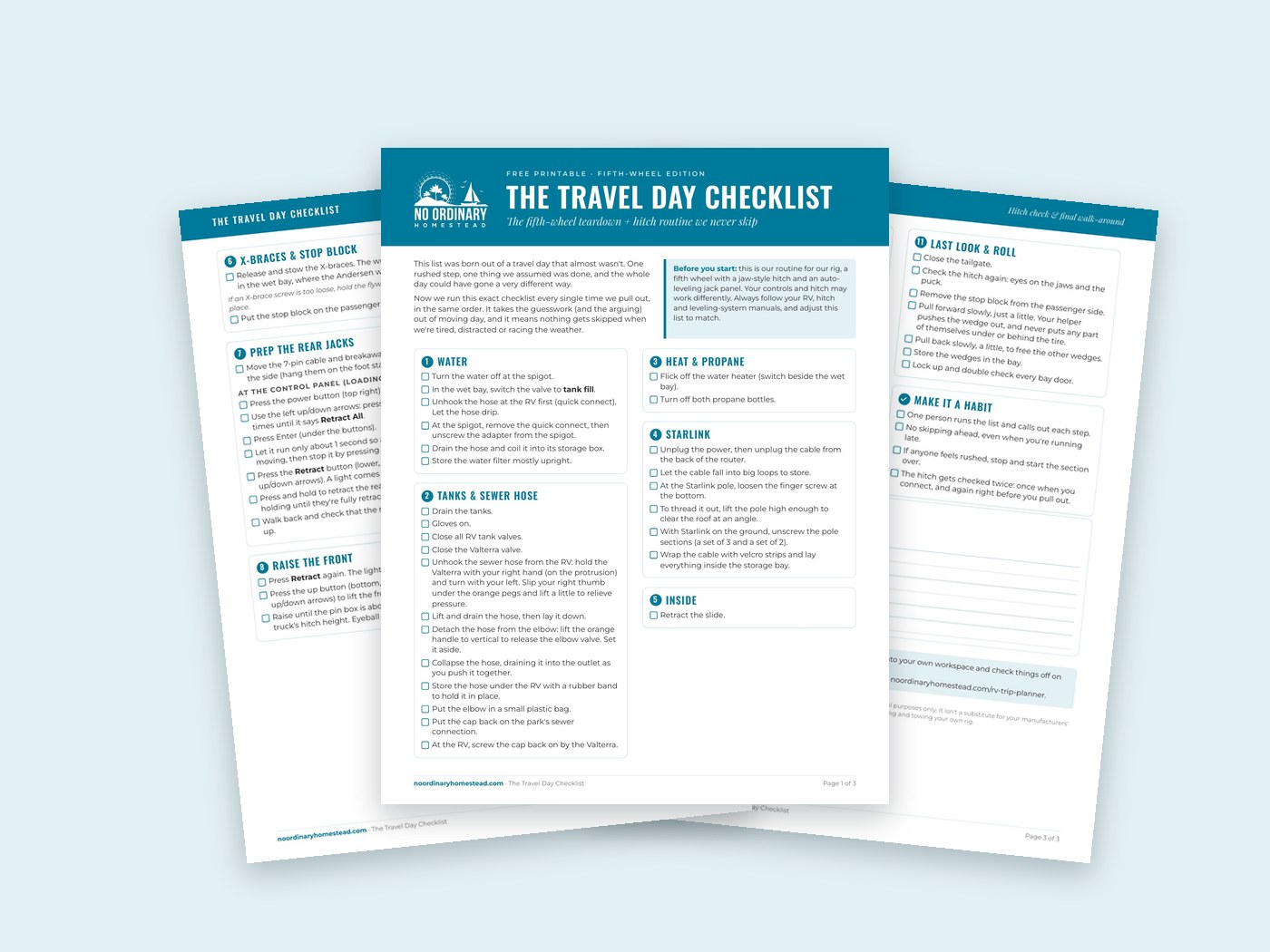
Free printable: The Simpler Way RV Trip Planner
The same 10-page planner we use for every trip in our fifth wheel: our planning rules, a hub planner, a campground scouting checklist, a budget sheet, a packing list and a travel day checklist.
Have you visited Custer State Park or the Black Hills? Did you meet the burros? Tell us in the comments below!