We live in our fifth wheel full-time, and there’s one number we check before almost anything else: the overnight low. Not the daytime high. Not the rain chance. The low.
Winter RV living sounds cozy (and some nights it is), but our RV and our family are built for following the warm weather, not riding out a real winter. So the overnight low decides where we park, how long we stay and when we move on. Here’s why, and what we do when the forecast surprises us anyway.
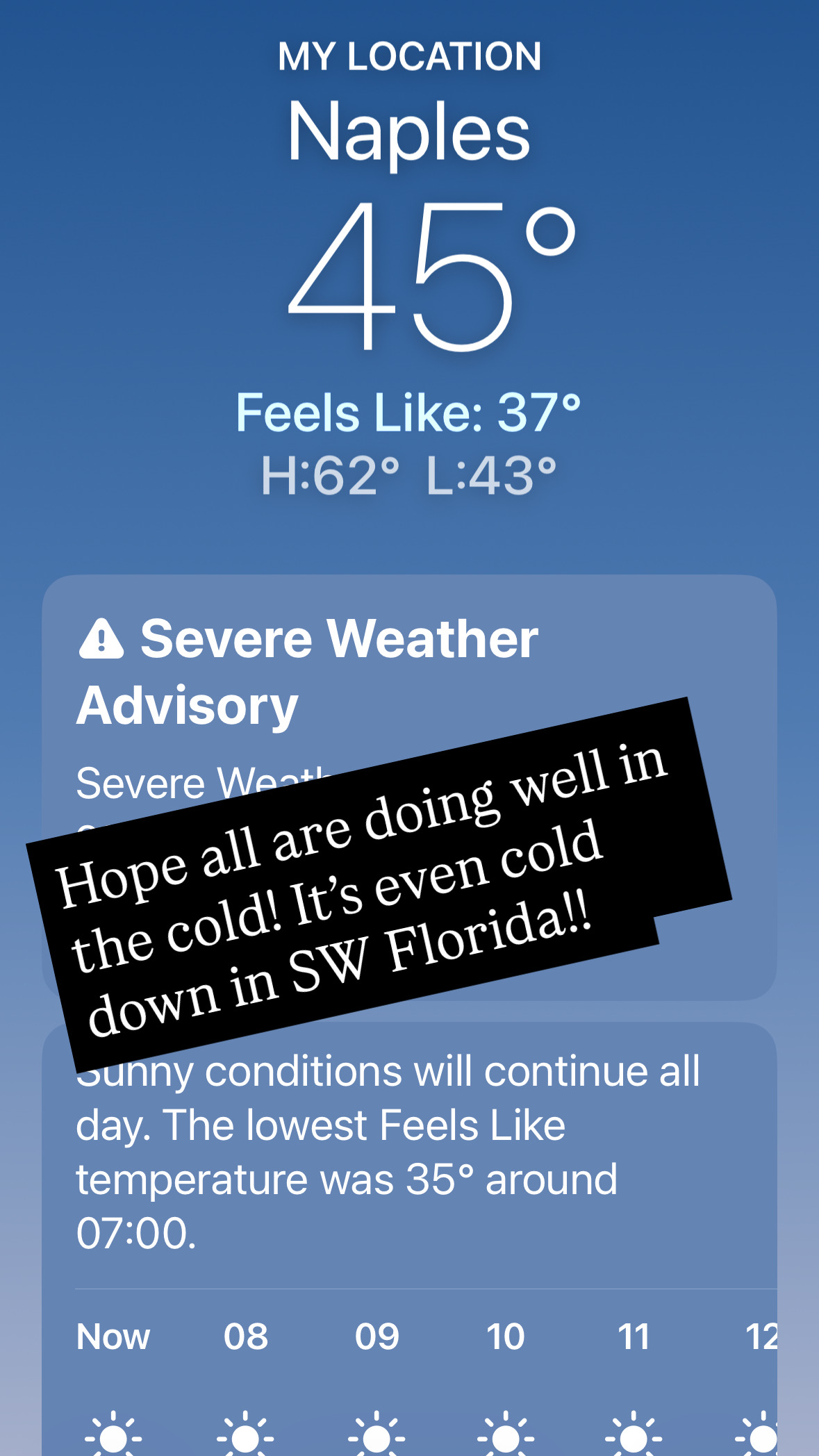
Yes, that’s Naples, Florida. Even Southwest Florida gets a cold morning now and then.
Our rule: 32 degrees is the line
Our goal is simple. We like nights in the 50s and 60s and days in the 70s and 80s (or a little cooler). Lows in the 40s are fine, but they start eating into the propane budget, and we don’t usually carry real winter jackets with us.
Freezing is where we draw the line. We do our best not to stay anywhere the overnight low drops below 32°F. It has happened to us once or twice, for a night or two. But a long winter like you get up North or in the Midwest isn’t for us, or for our RV.
What actually happens to our RV when it freezes
The big worry for us is the water lines underneath the rig. Our Jayco Eagle HT 29DDB is said to be four-season rated, but in our experience it isn’t especially well insulated.
The furnace is efficient, but we don’t have an electric heat option. That means every cold night runs on propane, and it goes fast once the lows dip into the 40s or below.
Here’s what that looks like in real numbers:
- Cold nights (mid to high 30s): we went through a 40 lb propane tank in about three days.
- Mild weather (no heat): that same 40 lb tank lasts us more than three months. That’s hot water for showers and dishes, plus cooking on our Blackstone griddle and the gas range.
Three days versus three months. That’s the whole reason we check the low first.
How we check the overnight low
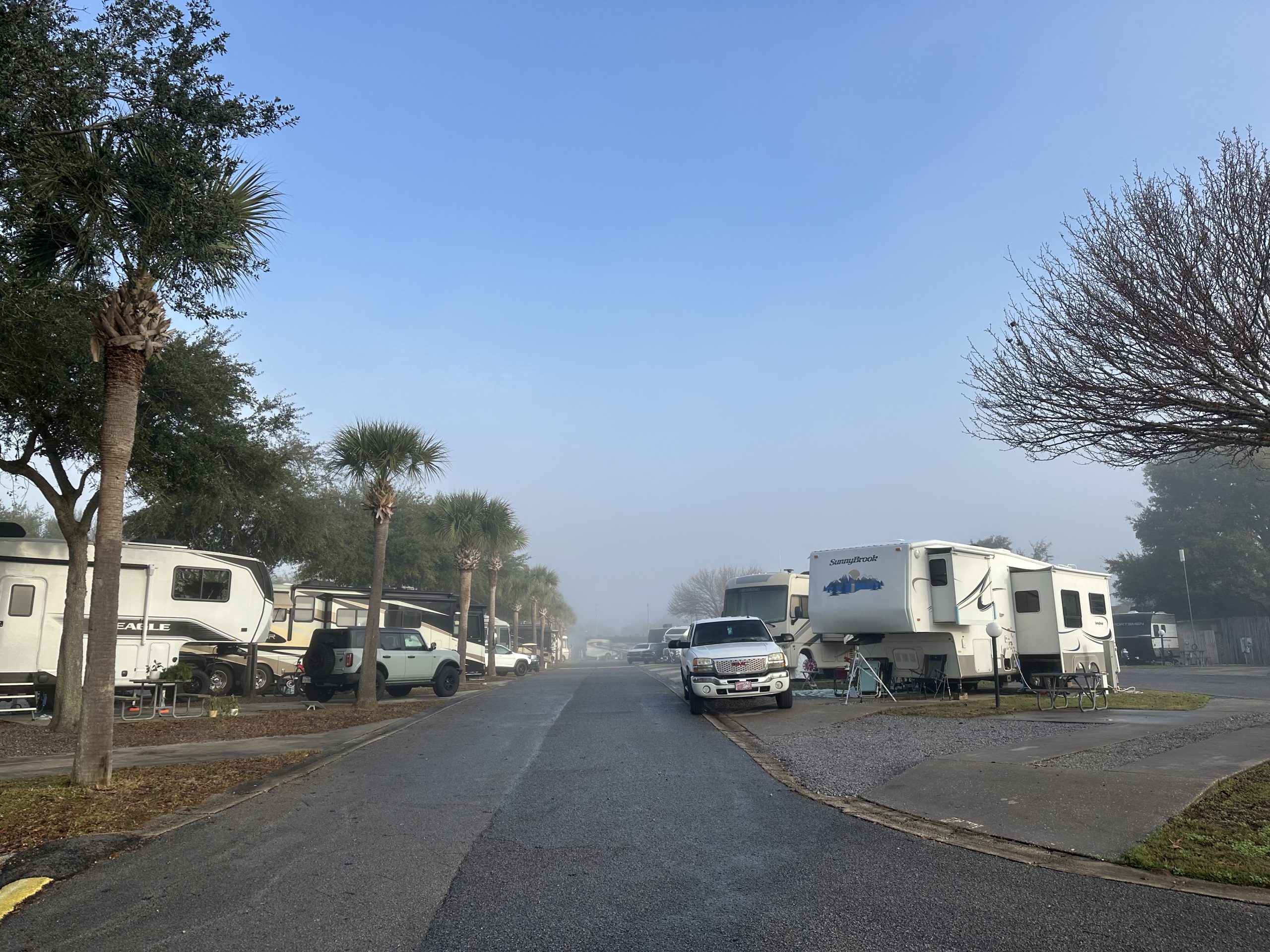
We don’t trust just one forecast. We check the built-in Weather app on our iPhones and the premium version of the weather.com app, and compare them. For approaching weather and the big picture across the country, we also check the National Weather Service radar.
- How far ahead: as far as we can, usually about 10 days. We know accuracy isn’t great that far out, but it gives us a heads-up.
- Before we book: we look at historical weather averages for the time of year and stay as far south as we can in winter. That’s why we rarely have to change plans on the fly.
- Our cutoff: 32°F, for the most part. Sometimes you just end up with surprising weather.
When we’re traveling with our plane, we watch the weather even more closely. We’ve had rain pop up out of nowhere more than once, and we’d never want to be caught like that with snow.
If you want to see the rest of the tools on our phones, here are the 11 RV trip planning apps we actually use.
Our plan for a surprise cold night
Because we’re rarely somewhere cold for more than a night or two, we keep our cold-weather plan simple:
- Low 30s: we use our REHOSEUP heated RV water hose.
- Below that: we disconnect the water hose from the spigot altogether.
- Fill the fresh water tank before the cold night, so we still have water if we disconnect.
- Watch the propane. A cold night is not the night to run a tank dry.
We don’t use skirting or space heaters. For a night or two, it isn’t worth it for us.
How the overnight low shapes our routes
Weather plays a big part in how we plan. We often travel in spring and early summer, and the places we love tend to be at higher elevations or farther north, which makes them more likely to get a cold snap.
Our first full-time winter, starting in December 2025, was a loop along the Gulf Coast and Florida. Even there, we learned that Florida doesn’t always stay warm. In January 2026, it dropped into the upper 20s at night in Titusville. We needed our heated hose, and the freeze was hard enough to kill off a lot of the plants around town. There was even a dusting of snow in Navarre, on the Florida Panhandle, not long after we’d left.
That’s why the overnight low shaped the route for our next big trip, the Lobstah Crawl. We leave Naples in January and head north on purpose as the weather warms up. We had to be careful not to leave Florida too early, because even parts of the Carolinas can still get chilly at night. Where mountain stops looked too cold for our timing, we swapped in lower, warmer ones, like Greenville, South Carolina instead of Asheville, and Cuyahoga Valley instead of Hocking Hills in Ohio.
The catch with winter in Florida by RV
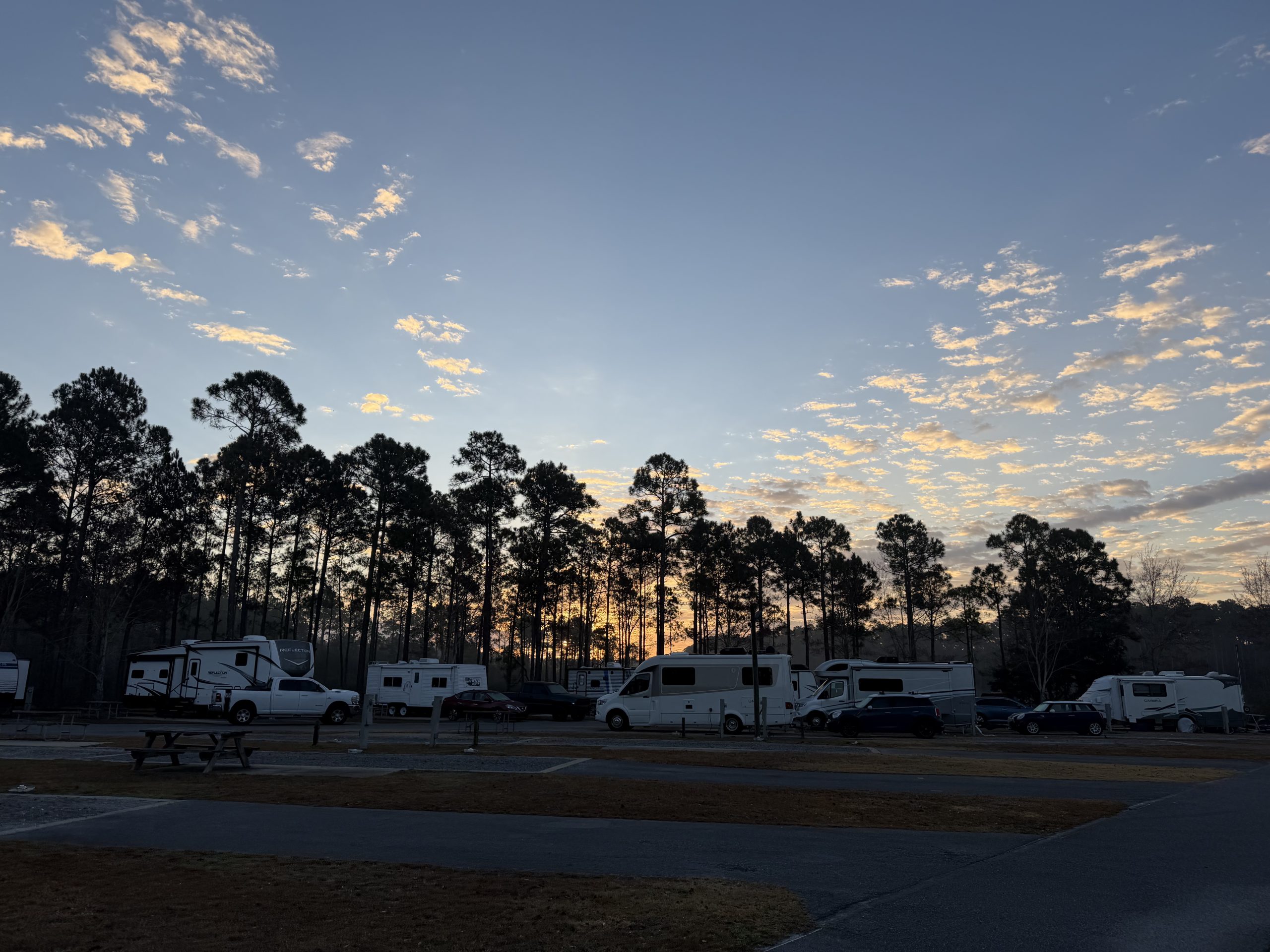
Following the warmth south works, but you won’t be the only one doing it.
- It’s expensive. January through March is peak season, and rates show it.
- Book early. Availability can be really limited, even at private parks. The East Coast of Florida, the Keys and the state parks book up fast.
- Sites can be tight. Sites in those popular areas can be really tight to navigate, especially with a big fifth wheel.
Keeping the inside cozy on cold nights
- A small dehumidifier. We bought a small ToLife dehumidifier last summer to fight condensation coming through our bathroom vent. The gas furnace creates a lot of condensation on the windows, so it earns its spot in winter, too.
- Rugs everywhere. A big rug covers the living room floor, and runners line the bedroom, so bare feet don’t hit a cold floor first thing in the morning.
- Let the sun in. On winter days we open the shades and let the sunshine do some of the heating.
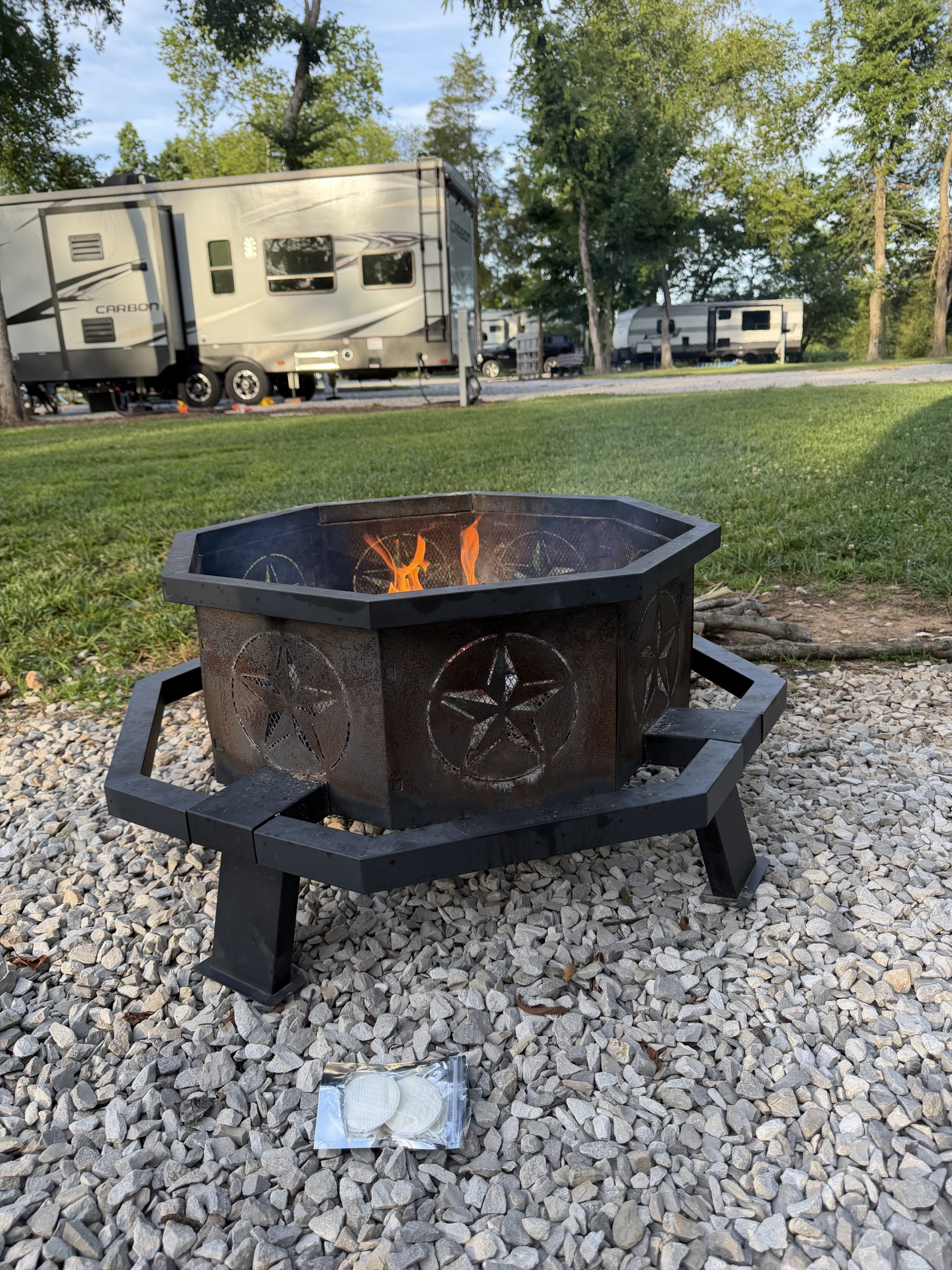
- Campfire season. Cool evenings are the perfect time for a fire outside. We hardly ever light one when it’s hot.
If you want to try winter RV living somewhere truly cold
We’re not the experts here, since we chase the warm weather. But if you’re planning to stay somewhere with real winters, make sure your RV can actually handle it, not just that it says “four-season” on the brochure. We’ve also heard good things about inflatable RV skirting, especially if you’ll be moving around during the winter.
Our quick winter RV living checklist
- Check the overnight low for your next stops, about 10 days out.
- Look up historical averages before you book winter stays.
- Know your cutoff temperature (ours is 32°F).
- Pack a heated water hose, and know when to disconnect.
- Fill the fresh water tank before a cold night.
- Keep an eye on propane, and know how fast your rig uses it.
- Run a dehumidifier to keep window condensation down.
- Book Florida winter sites early, especially January through March.
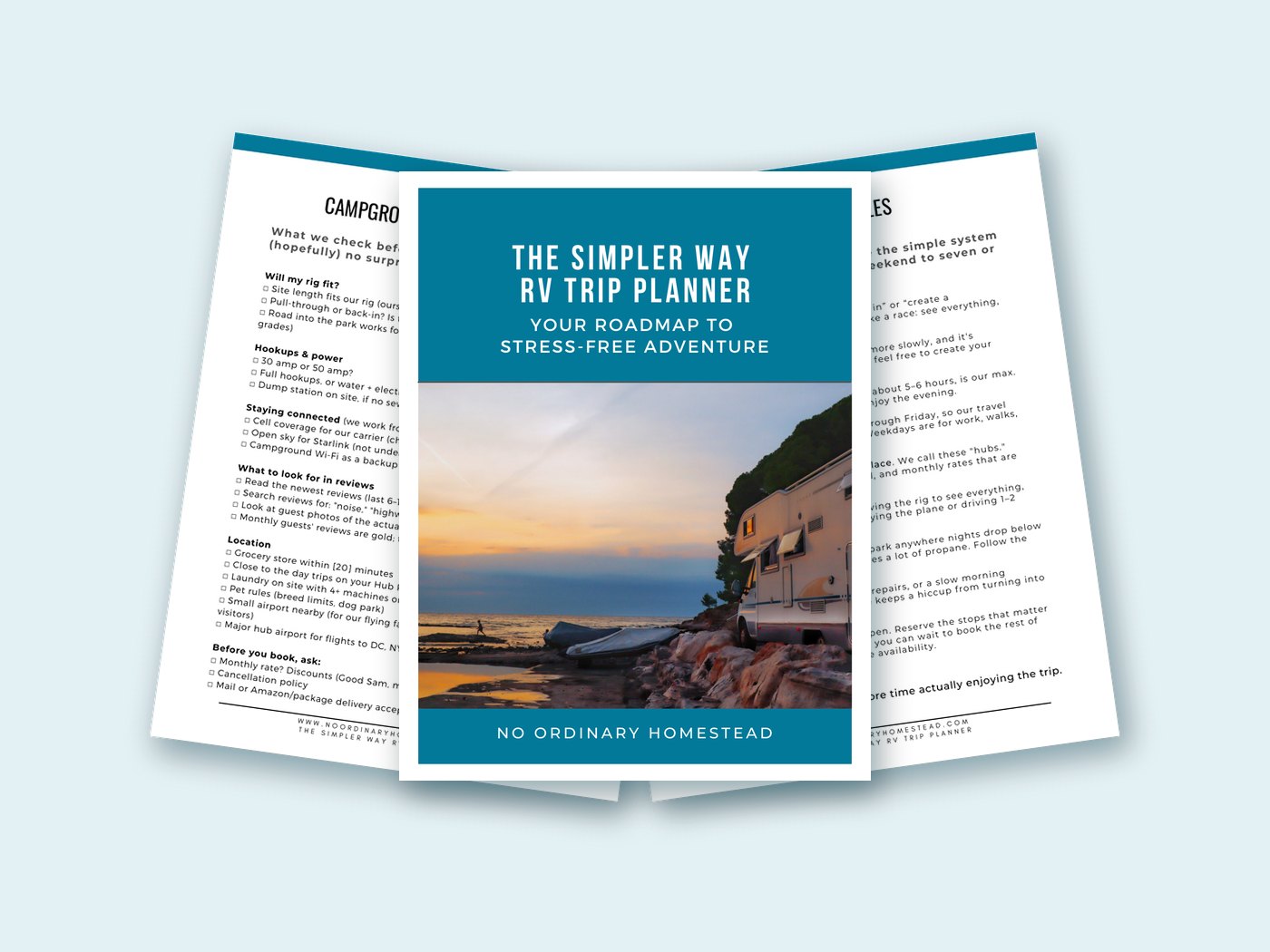
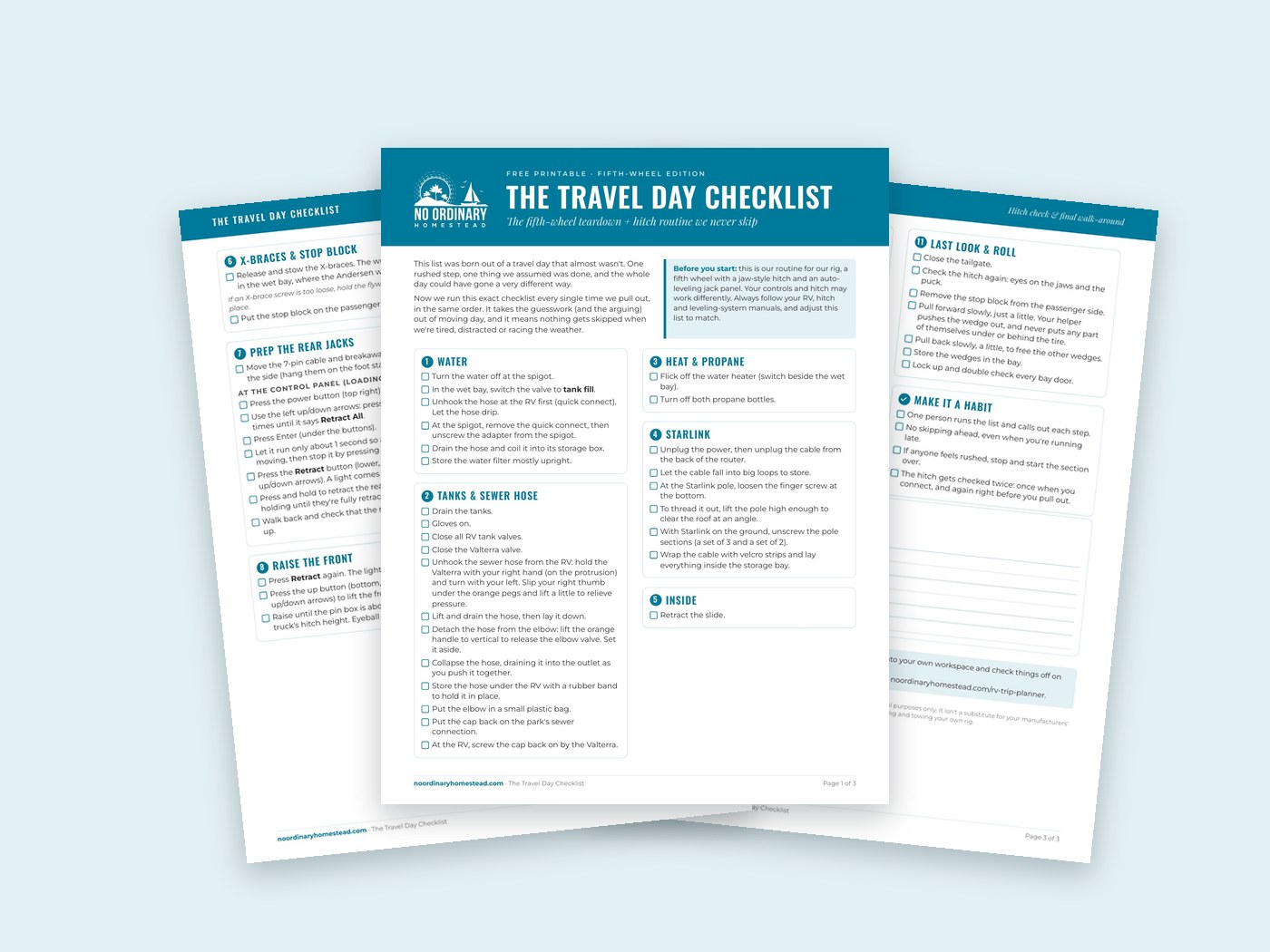
Planning your own winter route? Our free Simpler Way RV Trip Planner helps you map hubs and campgrounds, and our Travel Day Checklist covers everything we do before we pull out, including water and propane.
Do you chase the warm weather too, or do you stick it out somewhere cold? Tell us in the comments.

Free printable
The Simpler Way RV Trip Planner
The same pages we use to plan every route: stops, drive days, budgets and campground notes. Grab it free: